Biology and Biotechnology of Duckweeds: Emerging Champions of Sustainable Bioproduction
DOI:
https://doi.org/10.22034/JAPB.2025.248Keywords:
Duckweed , Duckweed, Lemna, Spirodela, Molecular Pharming, Phytoremediation, Genetic Transformation, Sustainable Bioproduction, BiosafetyAbstract
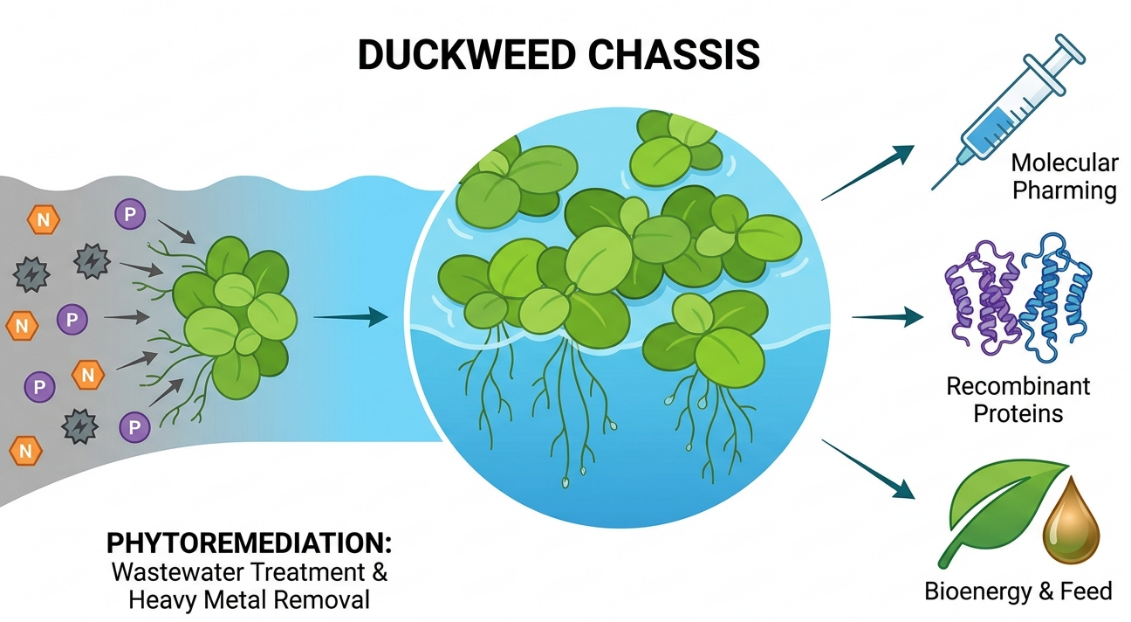
Background: Duckweeds (Lemnaceae family), the smallest and fastest-growing flowering plants, are gaining prominence as sustainable bioproduction platforms. Their rapid growth, aquatic habit, and high protein content make them uniquely suited for applications in molecular pharming, phytoremediation, bioenergy, and nutrition. Methods: This narrative review synthesizes peer-reviewed literature on duckweed systematics, genomics, genetic transformation, and biotechnological applications, with particular emphasis on molecular pharming and phytoremediation. Results: Advances in genomics, such as the sequencing of the Spirodela polyrhiza genome, have provided critical insights into their streamlined architecture and physiological adaptations. Efficient Agrobacterium-mediated transformation protocols have been established for genera including Lemna, Spirodela, and Wolffia, enabling high-yield production of recombinant proteins like vaccines and antibodies. Concurrently, duckweeds demonstrate remarkable efficacy in phytoremediation, efficiently removing nutrients, heavy metals, and organic micropollutants from wastewater. Conclusion: The integration of duckweed biology with modern biotechnological tools positions these plants as powerful, scalable, and sustainable solutions to global challenges in health, environment, and food security. Future research focused on precision breeding and integrated biorefinery models will further unlock their potential.