Foeniculum vulgare in Pediatric Gastrointestinal Health from Herbal Traditions to Advances in Molecular Medicine
DOI:
https://doi.org/10.22034/JAPB.2025.174Keywords:
Foeniculum vulgare, pediatric gastroenterology, phytotherapy, fennel, gut inflammation, microbiota, herbal medicineAbstract
Background: Herbal medicine plays an essential role in global healthcare, especially for pediatric populations where conventional pharmacological treatments may carry safety concerns. Foeniculum vulgare (fennel), a staple in traditional Persian and Greco-Arabic medicine, is increasingly recognized for its therapeutic role in managing gastrointestinal (GI) disorders in children.
Objective: This review synthesizes traditional uses with contemporary molecular evidence to explore fennel’s potential in pediatric GI care.
Methods: A comprehensive analysis of F. vulgare's phytochemical profile and molecular mechanisms, including anti-inflammatory, spasmolytic, antioxidant, and microbiota-modulating actions, is presented, alongside its formulation strategies and clinical relevance.
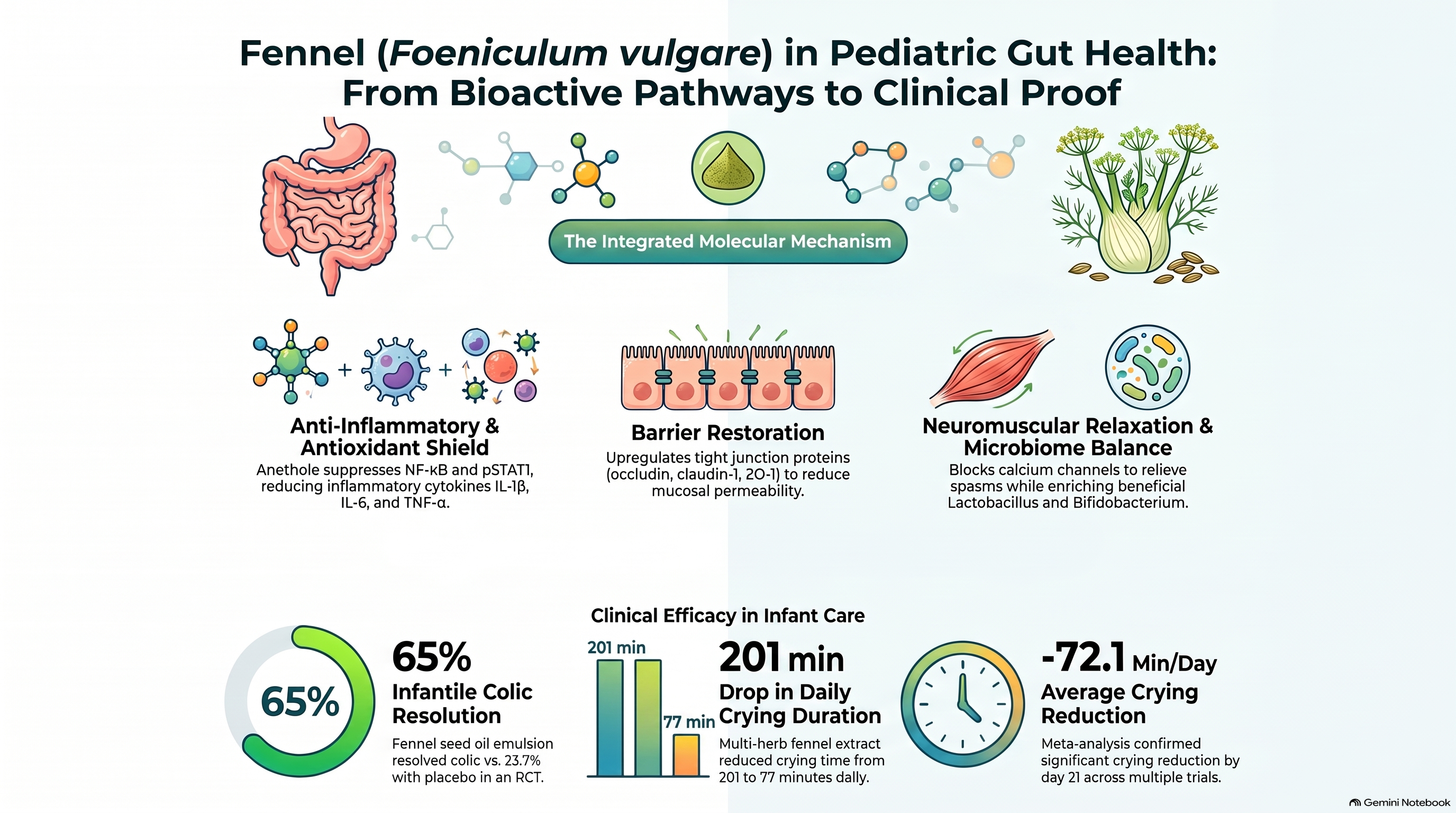
Results: Anethole, fenchone, limonene, and flavonoids underpin fennel’s multi-target effects by modulating inflammatory pathways (e.g., NF-κB, pSTAT1), strengthening intestinal barrier proteins (e.g., claudin-1, occludin), regulating gut motility, and promoting beneficial microbiota (e.g., Lactobacillus , Bifidobacterium). These actions align with the pathophysiology of pediatric disorders such as colic, abdominal pain, and diarrhea.
Conclusion: F. vulgare offers a well-tolerated, mechanistically diverse phytotherapeutic option for pediatric GI disorders. Future standardization, safety evaluations, and clinical studies are warranted to enable its evidence-based integration into pediatric healthcare.