Smart Electroactive Scaffolds: Integrating Electrical Signaling, Mechanical Responsiveness, and Biological Function for Next-Generation Regenerative Therapies
Electroactive Scaffolds for Regenerative Medicine
DOI:
https://doi.org/10.22034/JATE.2026.243Keywords:
Electroactive scaffolds, Conductive biomaterials, Piezoelectric biomaterials, MXenesAbstract
Abstract
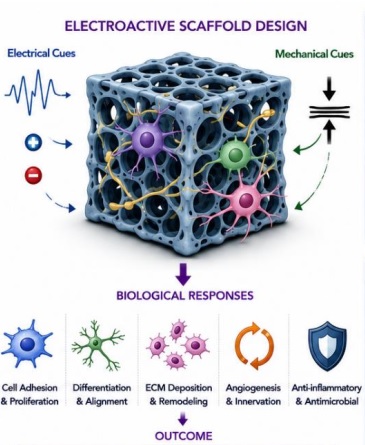
The extracellular microenvironment is far more than a passive structural framework; it represents a dynamic and electromechanically active niche that influences cellular behavior, tissue organization, and regenerative processes. Although conventional polymeric scaffolds have been successful in reproducing key structural and biochemical features of native tissues, they have generally ignored the critical role of endogenous bioelectric signals that regulate fundamental biological events, including wound repair, neural development, and cardiac electrical synchronization. In recent years, a fundamental shift has emerged in tissue engineering, moving away from the concept of scaffolds as inert structural supports toward the development of electroactive and
This review examines the major classes of electroactive materials, including intrinsically conductive polymers, metal-enhanced electroactive polymers, carbon-based nanomaterials, piezoelectric ceramics and polymers, and emerging two-dimensional materials such as MXenes, with a focus on their physicochemical characteristics, fabrication strategies, and biological integration. A systematic literature search across PubMed/MEDLINE, Web of Science, Scopus, and IEEE Xplore was conducted to identify peer-reviewed studies on electroactive scaffolds published primarily between 2010 and 2026; eligible experimental and translational reports were screened, and data were extracted and synthesized narratively by material class, design strategy, and tissue application. We further discuss how electrical conductivity, piezoelectric responses, and stimuli-responsive properties can regulate cellular functions and enhance regeneration in neural, cardiac, musculoskeletal, and skin tissues. Particular attention is given to the relationship between material properties and electrical stimulation strategies, the development of self-powered and multifunctional scaffold systems, and the remaining challenges associated with clinical translation, including long-term material stability, manufacturing standardization, and regulatory considerations.
References
Marsudi MA, Ariski RT, Wibowo A, Cooper G, Barlian A, Rachmantyo R, et al. Conductive Polymeric-Based Electroactive Scaffolds for Tissue Engineering Applications: Current Progress and Challenges from Biomaterials and Manufacturing Perspectives. Int J Mol Sci. 2021;22(21):11543. doi:10.3390/ijms222111543
Liu Z, Wan X, Wang ZL, Li L. Electroactive Biomaterials and Systems for Cell Fate Determination and Tissue Regeneration: Design and Applications. Adv Mater. 2021;33(32). doi:10.1002/adma.202007429
Senanayake J, Sundararaghavan HG. Bioengineered Conductive Scaffolds for Neural Tissue Engineering. Bioelectricity. 2024;6(1):13–25. doi:10.1089/bioe.2023.0023
Ávila Ramírez AE, van der Laan DP, Shah MB, Wang L, Zeglio E, Savva A. PEDOT:PSS—A Key Material for Bioelectronics. Adv Sci. 2026;13(11):e13480. doi:10.1002/advs.202513480
Shin SR, Jung SM, Zalabany M, Kim K, Zorlutuna P, Kim SB, et al. Carbon-nanotube-embedded hydrogel sheets for engineering cardiac constructs and bioactuators. ACS Nano. 2013;7(3):2369–80. doi:10.1021/nn305559j
Zhang Y, Petibone D, Xu Y, Mahmood M, Karmakar A, Casciano D, et al. Toxicity and efficacy of carbon nanotubes and graphene: the utility of carbon-based nanoparticles in nanomedicine. Drug Metab Rev. 2014;46(2):232–46. doi:10.3109/03602532.2014.883406
Bhadwal N, Ben Mrad R, Behdinan K. Review of Piezoelectric Properties and Power Output of PVDF and Copolymer-Based Piezoelectric Nanogenerators. Nanomaterials. 2023;13(24). doi:10.3390/nano13243170
Dong Y, Zhang S, Xu T, Sun W, Liu X. Advances of piezoelectric biomaterials in bone defect repair: The role of direct and inverse piezoelectric effect. J Orthop Translat. 2026;58:101106. doi:10.1016/j.jot.2026.101106
Mengru Z, Qinyi W, Zimo Y, Bingqing G, Zhongyu X, Xu J. MXenes in the application of diabetic foot: mechanisms, therapeutic implications and future perspectives. J Mater Sci Mater Med. 2025;36(1):42. doi:10.1007/s10856-025-06895-2
Qiu R, Zhang X, Song C, Xu K, Nong H, Li Y, et al. E-cardiac patch to sense and repair infarcted myocardium. Nat Commun. 2024;15(1):4133. doi:10.1038/s41467-024-48468-x
Lee M, Kim MC, Lee JY. Nanomaterial-Based Electrically Conductive Hydrogels for Cardiac Tissue Repair. Int J Nanomedicine. 2022;17:6181. doi:10.2147/ijn.s386763
Song X, Zhang J, Shen S, Liu D, Zhang J, Yin W, et al. Cardiac-Adaptive Conductive Hydrogel Patch Enabling Construction of Mechanical-Electrical Anisotropic Microenvironment for Heart Repair. Research (Wash D C). 2023;6. doi:10.34133/research.0161
Yong S, Tian L, Huang D, Xi Y, Chen H, Jiao Z, et al. Engineered decalcified bone matrix/barium titanate piezoelectric composite scaffolds for bone regeneration. J Mater Chem B. 2025;13(29):8789–807. doi:10.1039/d5tb00321k
Zhao Y, Cai Y, Wang W, Bai Y, Liu M, Wang Y, et al. Periosteum-bone inspired hierarchical scaffold with endogenous piezoelectricity for neuro-vascularized bone regeneration. Bioact Mater. 2025;44:339–53. doi:10.1016/j.bioactmat.2024.10.020
Zaszczyńska A, Zabielski K, Gradys A, Kowalczyk T, Sajkiewicz P. Piezoelectric Scaffolds as Smart Materials for Bone Tissue Engineering. Polymers (Basel). 2024;16(19):2797. doi:10.3390/polym16192797
Jia W, Zhou Z, Zhan W. Musculoskeletal Biomaterials: Stimulated and Synergized with Low Intensity Pulsed Ultrasound. J Funct Biomater. 2023;14(10):504. doi:10.3390/jfb14100504
Wang H, Li Y. Piezoelectric Biomaterials for Osteochondral Tissue Engineering: Advances, Mechanisms, and Translational Prospects. J Funct Biomater. 2026;17(4):173. doi:10.3390/jfb17040173
Yu R, Zhang H, Guo B. Conductive Biomaterials as Bioactive Wound Dressing for Wound Healing and Skin Tissue Engineering. Nano Micro Lett. 2021;14(1):1. doi:10.1007/s40820-021-00751-y
Fernandez-Yague MA, Trotier A, Demir S, Abbah SA, Larrañaga A, Thirumaran A, et al. A Self-Powered Piezo-Bioelectric Device Regulates Tendon Repair-Associated Signaling Pathways through Modulation of Mechanosensitive Ion Channels. Adv Mater. 2021;33(40):2008788. doi:10.1002/adma.202008788
Hardy JG, Mouser DJ, Arroyo-Currás N, Geissler S, Chow JK, Nguy L, et al. Biodegradable electroactive polymers for electrochemically-triggered drug delivery. J Mater Chem B. 2014;2(39):6809–22. doi:10.1039/c4tb00355a
Qazi TH, Rai R, Boccaccini AR. Tissue engineering of electrically responsive tissues using polyaniline based polymers: A review. Biomaterials. 2014;35(33):9068–86. doi:10.1016/j.biomaterials.2014.07.020
Kim S, Jang Y, Jang M, Lim A, Hardy JG, Park HS, et al. Versatile biomimetic conductive polypyrrole films doped with hyaluronic acid of different molecular weights. Acta Biomater. 2018;80:258–68. doi:10.1016/j.actbio.2018.09.035
Yang J, Choe G, Yang S, Jo H, Lee JY. Polypyrrole-incorporated conductive hyaluronic acid hydrogels. Biomater Res. 2016;20(1):31. doi:10.1186/s40824-016-0078-y
Shin J, Choi EJ, Cho JH, Cho AN, Jin Y, Yang K, et al. Three-Dimensional Electroconductive Hyaluronic Acid Hydrogels Incorporated with Carbon Nanotubes and Polypyrrole by Catechol-Mediated Dispersion Enhance Neurogenesis of Human Neural Stem Cells. Biomacromolecules. 2017;18(10):3060–72. doi:10.1021/acs.biomac.7b00568
Shi G, Rouabhia M, Wang Z, Dao LH, Zhang Z. A novel electrically conductive and biodegradable composite made of polypyrrole nanoparticles and polylactide. Biomaterials. 2004;25(13):2477–88. doi:10.1016/j.biomaterials.2003.09.032
Zhang X, Qi H, Wang S, Feng L, Ji Y, Tao L, et al. Cellular responses of aniline oligomers: a preliminary study. Toxicol Res (Camb). 2012;1(3):201–5. doi:10.1039/c2tx20035j
Guo B, Finne-Wistrand A, Albertsson AC. Molecular Architecture of Electroactive and Biodegradable Copolymers Composed of Polylactide and Carboxyl-Capped Aniline Trimer. Biomacromolecules. 2010;11(4):855–63. doi:10.1021/bm9011248
Mawad D, Mansfield C, Lauto A, Perbellini F, Nelson GW, Tonkin J, et al. A Conducting polymer with enhanced electronic stability applied in cardiac models. Sci Adv. 2016;2(11). doi:10.1126/sciadv.1601007
Guo B, Finne-Wistrand A, Albertsson AC. Enhanced Electrical Conductivity by Macromolecular Architecture: Hyperbranched Electroactive and Degradable Block Copolymers Based on Poly(ε-caprolactone) and Aniline Pentamer. Macromolecules. 2010;43(10):4472–80. doi:10.1021/ma100530k
Guo B, Finne-Wistrand A, Albertsson AC. Versatile functionalization of polyester hydrogels with electroactive aniline oligomers. J Polym Sci A Polym Chem. 2011;49(9):2097–105. doi:10.1002/pola.24643
Lo CY, Wu Y, Awuyah E, Meli D, Nguyen DM, Wu R, et al. Influence of the molecular weight and size distribution of PSS on mixed ionic-electronic transport in PEDOT:PSS. Polym Chem. 2022;13(19):2764. doi:10.1039/d2py00271j
Liang Y, Offenhäusser A, Ingebrandt S, Mayer D. PEDOT:PSS‐Based Bioelectronic Devices for Recording and Modulation of Electrophysiological and Biochemical Cell Signals. Adv Healthc Mater. 2021;10(11):2100061. doi:10.1002/adhm.202100061
Kim N, Kee S, Lee SH, Lee BH, Kahng YH, Jo YR, et al. Highly conductive PEDOT:PSS nanofibrils induced by solution-processed crystallization. Adv Mater. 2014;26(14):2268–72. doi:10.1002/adma.201304611
Zhang S, Chen Y, Liu H, Wang Z, Ling H, Wang C, et al. Room-temperature Formed PEDOT:PSS Hydrogels Enable Injectable, Soft, and Healable Organic Bioelectronics. Adv Mater. 2019;32(1):e1904752. doi:10.1002/adma.201904752
Han M, Yildiz E, Kaleli HN, Karaz S, Eren GO, Dogru-Yuksel IB, et al. Tissue-Like Optoelectronic Neural Interface Enabled by PEDOT:PSS Hydrogel for Cardiac and Neural Stimulation. Adv Healthc Mater. 2022;11(8):2102160. doi:10.1002/adhm.202102160
Cellot G, Lagonegro P, Tarabella G, Scaini D, Fabbri F, Iannotta S, et al. PEDOT:PSS Interfaces Support the Development of Neuronal Synaptic Networks with Reduced Neuroglia Response In vitro. Front Neurosci. 2016;9(JAN):521. doi:10.3389/fnins.2015.00521
Acharya R, Dutta SD, Patil T V., Ganguly K, Randhawa A, Lim KT. A Review on Electroactive Polymer–Metal Composites: Development and Applications for Tissue Regeneration. J Funct Biomater. 2023;14(10):523. doi:10.3390/jfb14100523
Barabadi Z, Bahmani A, Jalalimonfared M, Ashrafizadeh M, Rashtbar M, Sharifi E, et al. Design and characterization of electroactive gelatin methacrylate hydrogel incorporated with gold nanoparticles empowered with parahydroxybenzaldehyde and curcumin for advanced tissue engineering applications. J Mater Sci Mater Med. 2024;35(1):45. doi:10.1007/s10856-024-06808-9
Kelarakis A. In Situ Generation of Nanoparticles on and within Polymeric Materials. Polymers (Basel). 2024;16(11):1611. doi:10.3390/polym16111611
Stefanescu EA, Daranga C, Stefanescu C. Insight into the Broad Field of Polymer Nanocomposites: From Carbon Nanotubes to Clay Nanoplatelets, via Metal Nanoparticles. Materials. 2009;2(4):2095-2153. doi:10.3390/ma2042095
Augustyn P, Rytlewski P, Moraczewski K, Mazurkiewicz A. A review on the direct electroplating of polymeric materials. J Mater Sci. 2021;56(27):14881-14899. doi:10.1007/s10853-021-06246-w
Xiao L, Hui F, Tian T, Yan R, Xin J, Zhao X, et al. A Novel Conductive Antibacterial Nanocomposite Hydrogel Dressing for Healing of Severely Infected Wounds. Front Chem. 2021;9:787886. doi:10.3389/fchem.2021.787886/full
Baranes K, Shevach M, Shefi O, Dvir T. Gold Nanoparticle-Decorated Scaffolds Promote Neuronal Differentiation and Maturation. Nano Lett. 2016;16(5):2916–20. doi:10.1021/acs.nanolett.5b04033
Osipov V, Jawed A, Lutsyk P, Webb DJ, Fratini A. Conductive Scaffolding for Neural Tissue Regeneration: 3D Bridging with Two-Photon Fabrication [Internet]. 2026 Feb 16 [cited 2026 Aug 28]. Available from: https://arxiv.org/pdf/2602.14669
Ke Q, Zhang X, Yang Y, Chen Q, Su J, Tang Y, et al. Wearable Magnetoelectric Stimulation for Chronic Wound Healing by Electrospun CoFe2O4@CTAB/PVDF Dressings. ACS Appl Mater Interfaces. 2024;16(8):9839–53. doi:10.1021/acsami.3c17963
Singer A, Dutta S, Lewis E, Chen Z, Chen JC, Verma N, et al. Magnetoelectric materials for miniature, wireless neural stimulation at therapeutic frequencies. Neuron. 2020;107(4):631. doi:10.1016/j.neuron.2020.05.019
Summer M, Ashraf R, Ali S, Bach H, Noor S, Noor Q, et al. Inflammatory response of nanoparticles: Mechanisms, consequences, and strategies for mitigation. Chemosphere. 2024;363. doi:10.1016/j.chemosphere.2024.142826
Wang YL, Lee YH, Chou CL, Chang YS, Liu WC, Chiu HW. Oxidative stress and potential effects of metal nanoparticles: A review of biocompatibility and toxicity concerns. Environ Pollut. 2024;346:123617. doi:10.1016/j.envpol.2024.123617
Sun H, Zhou J, Huang Z, Qu L, Lin N, Liang C, et al. Carbon nanotube-incorporated collagen hydrogels improve cell alignment and the performance of cardiac constructs. Int J Nanomedicine. 2017;12:3109–20. doi:10.2147/ijn.s128030
Green RA, Lovell NH, Wallace GG, Poole-Warren LA. Conducting polymers for neural interfaces: Challenges in developing an effective long-term implant. Biomaterials. 2008 Aug;29(24–25):3393–9. doi:10.1016/j.biomaterials.2008.04.047
Ghaziof S, Mehdikhani-Nahrkhalaji M. Preparation, characterization, mechanical properties and electrical conductivity assessment of novel polycaprolactone/multi-wall carbon nanotubes nanocomposites for myocardial tissue engineering. Acta Phys Pol A. 2017;131(3):428–31. doi:10.12693/aphyspola.131.428
McCullen SD, Stevens DR, Roberts WA, Ojha SS, Clarke LI, Gorga RE. Morphological, Electrical, and Mechanical Characterization of Electrospun Nanofiber Mats Containing Multiwalled Carbon Nanotubes. Macromolecules. 2007;40(4):997–1003. doi:10.1021/ma061735c
Huang B. Carbon nanotubes and their polymeric composites: the applications in tissue engineering. Biomanuf Rev 2020 5:1. 2020;5(1):3-. doi:10.1007/s40898-020-00009-x
Ma H, Yu K, Wang H, Liu J, Cheng YY, Kang Y, et al. Fabrication and detection of a novel hybrid conductive scaffold based on alginate/gelatin/carboxylated carbon nanotubes (Alg/Gel/mMWCNTs) for neural tissue engineering. Tissue Cell. 2023;80. doi:10.1016/j.tice.2022.101995
Witkowska M, Florek E, Mrówczyński R. Assessment of Pristine Carbon Nanotubes Toxicity in Rodent Models. Int J Mol Sci. 2022;23(23):15343. doi:10.3390/ijms232315343
Bellet P, Gasparotto M, Pressi S, Fortunato A, Scapin G, Mba M, et al. Graphene-Based Scaffolds for Regenerative Medicine. Nanomaterials 2021, Vol 11, Page 404. 2021;11(2):404. doi:10.3390/nano11020404
Girão AF, Sousa J, Domínguez-Bajo A, González-Mayorga A, Bdikin I, Pujades-Otero E, et al. 3D Reduced Graphene Oxide Scaffolds with a Combinatorial Fibrous-Porous Architecture for Neural Tissue Engineering. ACS Appl Mater Interfaces. 2020;12(35):38962–75. doi:10.1021/acsami.0c10599
Kang MS, Jeong SJ, Lee SH, Kim B, Hong SW, Lee JH, et al. Reduced graphene oxide coating enhances osteogenic differentiation of human mesenchymal stem cells on Ti surfaces. Biomater Res. 2021;25(1). doi:10.1186/s40824-021-00205-x
Russell R, Medeiros A, Rowley A, Schujman S, Vlassiouk I V., Barnum TJ, et al. Fundamental Limitation: How Through-Thickness Heterogeneity in Laser-Reduced Graphene Oxide Compromises Sensor Stability. ACS Appl Nano Mater. 2026;9(20):9409–19. doi:10.1021/acsanm.6c00918
Mondal O, Mitra S, Pal M, Datta A, Dhara S, Chakravorty D. Reduced graphene oxide synthesis by high energy ball milling. Mater Chem Phys. 2015;161:123–9. doi:10.1016/j.matchemphys.2015.05.023
Simorgh S, Alasvand N, Khodadadi M, Ghobadi F, Malekzadeh Kebria M, Brouki Milan P, et al. Additive manufacturing of bioactive glass biomaterials. Methods. 2022;208:75–91. doi:10.1016/j.ymeth.2022.10.010
Li C, Qin F, Zhao S, Meng Q, He Q, Fan H. Preparation and characterization of a natural composite scaffold composed of chitosan, hydroxyapatite, and graphene oxide for bone repair. Sci Rep. 2026;16(1):15101. doi:10.1038/s41598-026-44493-6
Wang X, Stefanello ST, Shahin V, Qian Y. From Mechanoelectric Conversion to Tissue Regeneration: Translational Progress in Piezoelectric Materials. Adv Mater. 2025;37(33):2417564. doi:10.1002/adma.202417564
Yin Z, Tian B, Zhu Q, Duan C. Characterization and Application of PVDF and Its Copolymer Films Prepared by Spin-Coating and Langmuir–Blodgett Method. Polymers (Basel). 2019;11(12):2033. doi:10.3390/polym11122033
Minelli M, Micalizzi S, Longobardi V, Kon E, Oliva P, Della Rocca F. Piezoelectric scaffolds for bone regeneration: a systematic review of preclinical studies. Front Bioeng Biotechnol. 2026;14:1848820. doi:10.3389/fbioe.2026.1848820
Li M, Hu X, Liu X, Zhao L, Zhao W, Li Y, et al. 3D bioprinted piezoelectric hydrogel synergized with LIPUS to promote bone regeneration. Mater Today Bio. 2025 Apr;31:101604. doi:10.1016/j.mtbio.2025.101604
Fan B, Guo Z, Li X, Li S, Gao P, Xiao X, et al. Electroactive barium titanate coated titanium scaffold improves osteogenesis and osseointegration with low-intensity pulsed ultrasound for large segmental bone defects. Bioact Mater. 2020;5(4):1087. doi:10.1016/j.bioactmat.2020.07.001
Kadhum RN, Hamad TI. Barium titanate synthesis, mechanism of action and its applications in dentistry: A literature review. J Appl Biomater Funct Mater. 2025;23. doi:10.1177/22808000251375714
Ćurčić M, Hadžić B, Gilić M, Lazarević Z, Ilić A. BaTiO3 Nanocarriers: Advancing Targeted Therapies with Smart Drug Release. Pharmaceutics. 2025;17(9):1203. doi:10.3390/pharmaceutics17091203
Liu H, Xing X, Tan Y, Dong H. Two-dimensional transition metal carbides and nitrides (MXenes) based biosensing and molecular imaging. Nanophotonics. 2022;11(22):4977. doi:10.1515/nanoph-2022-0550
Suchorowiec K, Kasznik J, Stepura A, Omastová M, Pielichowska K. Polysaccharide Hydrogels Doped with MXenes for Possible Biomedical Applications. Molecules. 2026;31(1):148. doi:10.3390/molecules31010148
Lee M, Park J, Choe G, Lee S, Kang BG, Jun JH, et al. A Conductive and Adhesive Hydrogel Composed of MXene Nanoflakes as a Paintable Cardiac Patch for Infarcted Heart Repair. ACS Nano. 2023;17(13):12290–304. doi:10.1021/acsnano.3c00933
A critical review of MXene-derived bioactive materials for accelerated wound healing: Mechanisms, therapeutic strategies, and clinical prospects. Next Mater. 2026;13:102745. doi:10.1016/j.nxmate.2026.102745
Fenta EW, Mebratie BA. Advancements in carbon nanotube-polymer composites: Enhancing properties and applications through advanced manufacturing techniques. Heliyon. 2024;10(16):e36490. doi:10.1016/j.heliyon.2024.e36490
Wu Y, Zou J, Tang K, Xia Y, Wang X, Song L, et al. From electricity to vitality: the emerging use of piezoelectric materials in tissue regeneration. Burns Trauma. 2024;12:tkae013. doi:10.1093/burnst/tkae013
Ge J, Neofytou E, Cahill TJ, Beygui RE, Zare RN. Drug release from electric-field-responsive nanoparticles. ACS Nano. 2012;6(1):227–33. doi:10.1021/nn203430m
Sun S, Jiang G, Dong J, Xie X, Liao J, Tian Y. Photothermal hydrogels for infection control and tissue regeneration. Front Bioeng Biotechnol. 2024;12:1389327. doi:10.3389/fbioe.2024.1389327
Chu Y, Liao S, Liao H, Lu Y, Geng X, Wu D, et al. Second Near-Infrared Photothermal Therapy with Superior Penetrability through Skin Tissues. CCS Chem. 2022;41(9):3002–13. doi:10.31635/ccschem.021.202101539
Gayathri V, Khan T, Gowtham M, Balan R, Sebaey TA. Functionalized conductive polymer composites for tissue engineering and biomedical applications- a mini review. Front Bioeng Biotechnol. 2025;13:1533944. doi:10.3389/fbioe.2025.1533944/full
Naeem A, Yu C, Zhou L, Xie Y, Weng Y, Huang Y, et al. Shape memory hydrogels in tissue engineering: Recent advances and challenges. Bioact Mater. 2025;54:215–47. doi:10.1016/j.bioactmat.2025.08.009
Alkaya D, Cagliani R, Summak GY, Giro L, Besbinar O, Alhosani M, et al. MXene Chemistries for Biomedicine: On-Body, In-Body, and Beyond. ACS Nano. doi:10.1021/acsnano.6c05051
Liao X, Liu Y, Zheng J, Zhao X, Cui L, Hu S, et al. Diverse Pathways of Engineered Nanoparticle-Induced NLRP3 Inflammasome Activation. Nanomaterials 2022, Vol 12, Page 3908. 2022;12(21):3908. doi:10.3390/nano12213908
Shen H, Jia M, Zhu H, Shang Y, Wang L, Gao H, et al. Smart-responsive electrospun scaffolds (SRES) for neural repair: Recent advances and future prospects. Bioact Mater. 2026;66:234–72. doi:10.1016/j.bioactmat.2026.06.048
Zhai D, Yin Z, Kang Z, Song X, Han Z. Improvement of piezoelectric properties of electrospun PVDF nanofiber membrane and its application. J Ind Eng Chem. 2026;160:161-217. doi:10.1016/j.jiec.2026.03.036
Kim MS, Choi Y, Lee KY. Three-Dimensional Printing and Bioprinting Strategies for Cardiovascular Constructs: From Printing Inks to Vascularization. Polymers (Basel). 2025;17(17):2337. doi:10.3390/polym17172337
Sanjuan-Alberte P, Vaithilingam J, Moore JC, Wildman RD, Tuck CJ, Alexander MR, et al. Development of Conductive Gelatine-Methacrylate Inks for Two-Photon Polymerisation. Polymers (Basel). 2021;13(7). doi:10.3390/polym13071038
Chen J, Zou X. Self-assemble peptide biomaterials and their biomedical applications. Bioact Mater. 2019;4:120. doi:10.1016/j.bioactmat.2019.01.002
Espinoza-Torres S, Choquehuanca-Azaña A, Azeredo NFB, Rufino M, Angnes L. Electropolymerized Molecularly Imprinted Polymers Supported on Carbon-Based Materials for (Bio)sensing: Direct and Indirect Detection Strategies. Biosensors. 2026;16(6):350. doi:10.3390/bios16060350
Özevin Ergür BÖ, Oktay B, Ciftci F, Ahlatcıoğlu Özerol E. Production and Characterization of Conductive Scaffolds for Conducting Tissue Engineering. ChemistrySelect. 2025;10(24):e00790. doi:10.1002/slct.202500790
Khan B, Amara U, Khan B, Khan WU, Ahmad R u. S, Khan MS, et al. Next‐Generation Piezoelectric Materials in Wearable and Implantable Devices for Continuous Physiological Monitoring. Adv Sci. 2025;12(41):e07853. doi:10.1002/advs.202507853
Duan X, Lieber CM. Nanoelectronics Meets Biology: From Novel Nanoscale Devices for Live Cell Recording to 3D Innervated Tissues†. Chem Asian J. 2013 Oct;8(10):2304. doi:10.1002/asia.201300630
Kim S, Uroz M, Bays JL, Chen CS. Harnessing mechanobiology for tissue engineering. Dev Cell. 2021;56(2):180. doi:10.1016/j.devcel.2020.12.017
Echeverria Molina MI, Malollari KG, Komvopoulos K. Design Challenges in Polymeric Scaffolds for Tissue Engineering. Front Bioeng Biotechnol. 2021;9:617141. doi:10.3389/fbioe.2021.617141/full
Ryan CNM, Doulgkeroglou MN, Zeugolis DI. Electric field stimulation for tissue engineering applications. BMC Biomed Eng. 2021 Dec;3(1):1. doi:10.1186/s42490-020-00046-0
Markx GH. The use of electric fields in tissue engineering: A review. Organogenesis. 2008;4(1):11. doi:10.4161/org.5799
Purves D, Augustine GJ, Fitzpatrick D, Katz LC, LaMantia AS, McNamara JO, et al. Electrical Signals of Nerve Cells [Internet]. 2001 [cited 2026 Aug 26]. Available from: https://www.ncbi.nlm.nih.gov/books/NBK11053/
Sun Q, Mu X, Gao Q, Wang J, Hu M, Liu H. Influences of physical stimulations on the migration and differentiation of Schwann cells involved in peripheral nerve repair. Cell Adh Migr. 2025;19(1). doi:10.1080/19336918.2025.2450311
Rajnicek AM, Foubister LE, McCaig CD. Growth cone steering by a physiological electric field requires dynamic microtubules, microfilaments and Rac-mediated filopodial asymmetry. J Cell Sci. 2006;119(9):1736–45. doi:10.1242/jcs.02897
Yin H, Hu Y, Cheng H, Zhang B, Gao S, Ma X, et al. Viscoelastic and conductive nerve guidance conduits for peripheral nerve repair. Nanoscale. 2025;17(35):20169–77. doi:10.1039/d5nr00742a
Cheng H, Hu Y, Liao M, Pang X, Zhang H, Yu M, et al. Conductive Nerve Guidance Conduits Loaded With Adipose Mesenchymal Stem Cells for Peripheral Nerve Regeneration. Smart Med. 2025 Dec;4(4):e70025. doi:10.1002/smmd.70025
Li X, Yang W, Xie H, Wang J, Zhang L, Wang Z, et al. CNT/Sericin Conductive Nerve Guidance Conduit Promotes Functional Recovery of Transected Peripheral Nerve Injury in a Rat Model. ACS Appl Mater Interfaces. 2020;12(33):36860–72. doi:10.1021/acsami.0c08457
Xu D, Fu S, Zhang H, Lu W, Xie J, Li J, et al. Ultrasound-Responsive Aligned Piezoelectric Nanofibers Derived Hydrogel Conduits for Peripheral Nerve Regeneration. Adv Mater. 2024;36(28). doi:10.1002/adma.202307896
Olushanu M. Biomaterials: Advancements in Spinal Cord Injury Treatment. Premier J Neurosci. 2024 Nov 7. doi:10.70389/pjn.100001
Moghaddasi M, Oktay B, Bingol AB, Yanikoglu R, Muslu M, Ozbolat IT, et al. Conductive Nanocomposite Hydrogels for Neural Tissue Engineering: A Systematic Scoping Review of Recent Trends. Adv Sci. 2025;12(38):e16085. doi:10.1002/advs.202416085
Talman V, Ruskoaho H. Cardiac fibrosis in myocardial infarction—from repair and remodeling to regeneration. Cell Tissue Res. 2016;365(3):563. doi:10.1007/s00441-016-2431-9
Zhang L, Li T, Yu Y, Shi K, Bei Z, Qian Y, et al. An injectable conductive hydrogel restores electrical transmission at myocardial infarct site to preserve cardiac function and enhance repair. Bioact Mater. 2022;20:339–54. doi:10.1016/j.bioactmat.2022.06.001
Zhang Z, Lang X, Zhang Y, Dong X, Han X, Xu C, et al. The Application of Injectable Hydrogels in Myocardial Infarction Repair: Material Design, Biological Functions and Clinical Translation. Int J Mol Sci. 2026;27(14):6464. doi:10.3390/ijms27146464
Hu Q, Hou X, Shi H, Song Y, Zhou B, Hu X, et al. Design of a Janus Composite Patch with Anti-Adhesive and Growth-Promoting Functions for Abdominal Wall Defect Repair. Bioengineering 2025, Vol 12, Page 522. 2025;12(5):522. doi:10.3390/bioengineering12050522
Kao FC, Chiu PY, Tsai TT, Lin ZH. The application of nanogenerators and piezoelectricity in osteogenesis. Sci Technol Adv Mater. 2019;20(1):1103. doi:10.1080/14686996.2019.1693880
Guo J, Cao G, Wei S, Han Y, Xu P. Progress in the application of graphene and its derivatives to osteogenesis. Heliyon. 2023;9(11):e21872. doi:10.1016/j.heliyon.2023.e21872
Xie H, Cao T, Franco-Obregón A, Rosa V. Graphene-Induced Osteogenic Differentiation Is Mediated by the Integrin/FAK Axis. Int J Mol Sci. 2019;20(3):574. doi:10.3390/ijms20030574
Farjaminejad S, Dingle AM. The role of electrical stimulation in bone regeneration: mechanistic insights and therapeutic advances. Bioelectron Med. 2025;11(1):18. doi:10.1186/s42234-025-00180-x
Xu L, Wang E, Ying M, Luo L, Ren Y, Zhu C, et al. Restoration of endogenous electric fields with a glucose-powered symbiotic bioabsorbable bandage for diabetic wound healing. Sci Adv. 2026;12(24):eaed9445. doi:10.1126/sciadv.aed9445
Liu Y, Li W, Ge L. Conductive biomaterials for chronic wound healing. Adv Interv Mater. 2026;1(1):100001. doi:10.1016/j.advim.2025.100001
Wearable self-powered systems: Energy harvesting technologies and applications in health regulation. Wearable Electron. 2026 Aug 15. doi:10.1016/j.wees.2026.07.001
Varshney A, Chauhan S, Rawal S, Herrera OR, Sharma S. Nanogenerators in Biomedical Frontiers: Revolutionizing Self-Powered Healthcare Systems. ACS Omega. 2026;11(7):10921. doi:10.1021/acsomega.5c08225
Liu L, Li Z, Zhu T, Sun Y, Xu J. Advances in applications of low-dimensional piezoelectric materials in musculoskeletal system. Mater Today Bio. 2025;33:102065. doi:10.1016/j.mtbio.2025.102065
Barriga-Rivera A, Bareket L, Goding J, Aregueta-Robles UA, Suaning GJ. Visual prosthesis: Interfacing stimulating electrodes with retinal neurons to restore vision. Front Neurosci. 2017;11(NOV):307497. doi:10.3389/fnins.2017.00620/full
Wang J, Huang L, Guo T, Liu Z, Xu H, Yang H, et al. A self-powered sandwich-structured scaffold with dual-electroactive properties to regenerate damaged intervertebral discs after discectomy. J Mater Chem B. 2025;13(18):5389–402. doi:10.1039/d5tb00100e
Miller JP, Eldabe S, Buchser E, Johanek LM, Guan Y, Linderoth B. Parameters of Spinal Cord Stimulation and Their Role in Electrical Charge Delivery: A Review. Neuromodulation. 2016;19(4):373–84. doi:10.1111/ner.12438
Srirussamee K, Mobini S, Cassidy NJ, Cartmell SH. Direct electrical stimulation enhances osteogenesis by inducing Bmp2 and Spp1 expressions from macrophages and preosteoblasts. Biotechnol Bioeng. 2019;116(12):3421. doi:10.1002/bit.27142
Park S, Koppes RA, Froriep UP, Jia X, Achyuta AKH, McLaughlin BL, et al. Optogenetic control of nerve growth. Sci Rep 2015 5:1. 2015;5(1):9669-. doi:10.1038/srep09669
Li B, Ma Y, Fatima K, Zhou X, Gu X, Chen S, et al. 3D printed shape-memory piezoelectric scaffolds with in-situ self-power properties for bone defect repair. J Nanobiotechnol 2025 23:1. 2025;23(1):244-. doi:10.1186/s12951-025-03325-x
Thompson BC, Richardson RT, Moulton SE, Evans AJ, O’Leary S, Clark GM, et al. Conducting polymers, dual neurotrophins and pulsed electrical stimulation — Dramatic effects on neurite outgrowth. J Control Release. 2010;141(2):161–7. doi:10.1016/j.jconrel.2009.09.016
Evans AJ, Thompson BC, Wallace GG, Millard R, O’Leary SJ, Clark GM, et al. Promoting neurite outgrowth from spiral ganglion neuron explants using polypyrrole/BDNF-coated electrodes. J Biomed Mater Res A. 2009;91(1):241–50. doi:10.1002/jbm.a.32228
Da Silva AC, Hu X, Paschoal VH, Hagis N, Zajac AJ, Ribeiro MCC, et al. Bipolar electrochemistry-driven wireless drug loading and energy harvesting in conductive hybrid hydrogels. Commun Mater. 2025;6(1):28. doi:10.1038/s43246-025-00750-1
Fernandes E, Ledo A, Barbosa RM. Implantable microelectrode biosensors for monitoring neurometabolic markers. Bioelectrochemistry. 2026;171. doi:10.1016/j.bioelechem.2026.109286
Barman SR, Chan SW, Kao FC, Ho HY, Khan I, Pal A, et al. A self-powered multifunctional dressing for active infection prevention and accelerated wound healing. Sci Adv. 2023;9(4). doi:10.1126/sciadv.adc8758
Kang M, Lee DM, Hyun I, Rubab N, Kim SH, Kim SW. Advances in Bioresorbable Triboelectric Nanogenerators. Chem Rev. 2023;123(19):11559–618. doi:10.1021/acs.chemrev.3c00301
Chakraborty I, Olsson RT, Andersson RL, Pandey A. Glucose-based biofuel cells and their applications in medical implants: A review. Heliyon. 2024;10(13):e33615. doi:10.1016/j.heliyon.2024.e33615
Cai J, Shen F, Zhao J, Xiao X. Enzymatic biofuel cell: A potential power source for self-sustained smart textiles. iScience. 2024;27(2). doi:10.1016/j.isci.2024.108998
Naikwadi AT, Sharma BK, Bhatt KD, Mahanwar PA. Gamma Radiation Processed Polymeric Materials for High Performance Applications: A Review. Front Chem. 2022;10:837111. doi:10.3389/fchem.2022.837111
Li Y, Li N, De Oliveira N, Wang S. Implantable bioelectronics toward long-term stability and sustainability. Matter. 2021;4(4):1125–41. doi:10.1016/j.matt.2021.02.001
Gori M, Vadalà G, Giannitelli SM, Denaro V, Di Pino G. Biomedical and Tissue Engineering Strategies to Control Foreign Body Reaction to Invasive Neural Electrodes. Front Bioeng Biotechnol. 2021;9:659033. doi:10.3389/fbioe.2021.659033/full
Akhter S, Qureshi AR, Aleem I, El-Khechen HA, Khan S, Sikder O, et al. Efficacy of Electrical Stimulation for Spinal Fusion: A Systematic Review and Meta-Analysis of Randomized Controlled Trials. Sci Rep. 2020;10(1). doi:10.1038/s41598-020-61266-x
Aleem IS, Aleem I, Evaniew N, Busse JW, Yaszemski M, Agarwal A, et al. Efficacy of Electrical Stimulators for Bone Healing: A Meta-Analysis of Randomized Sham-Controlled Trials. Sci Rep. 2016;6. doi:10.1038/srep31724
Holme S, Richardson SM, Bella J, Pinali C. Hydrogels for Cardiac Tissue Regeneration: Current and Future Developments. Int J Mol Sci. 2025;26(5). doi:10.3390/ijms26052309
Khodagholy D, Gelinas JN, Thesen T, Doyle W, Devinsky O, Malliaras GG, et al. NeuroGrid: recording action potentials from the surface of the brain. Nat Neurosci 2015 18:2. 2014;18(2):310–5. doi:10.1038/nn.3905
Downloads
Published
How to Cite
Issue
Section
License
Copyright (c) 2026 The Journal of Applied Tissue Engineering

This work is licensed under a Creative Commons Attribution-NonCommercial-NoDerivatives 4.0 International License.