Cellular and Molecular Mechanisms of Scarless vs. Fibrotic Wound Healing: A Comprehensive Review
DOI:
https://doi.org/10.22034/JATE.2026.229Keywords:
Wound healing, Fibrosis, Myofibroblasts, Macrophage Activation, Extracellular matrixAbstract
Wound healing restores tissue integrity through overlapping phases of hemostasis, inflammation, proliferation, and remodeling. While adult wounds typically heal via fibrotic repair with excessive extracellular matrix deposition and scarring, early gestation fetal skin demonstrates scarless regenerative healing with complete architectural restoration. Understanding mechanisms distinguishing these outcomes is critical given the clinical burden of pathological fibrosis and chronic wounds.
This review synthesizes recent advances from single-cell and spatial transcriptomics to present a comprehensive framework comparing fibrotic and regenerative healing. We evaluate cellular heterogeneity, molecular signaling networks, and environmental drivers determining healing phenotype.
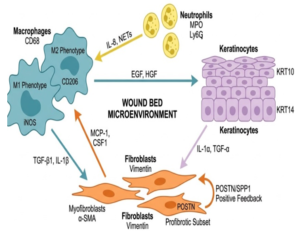
Healing outcome emerges from three interconnected regulatory axes: fibroblast lineage specification, where distinct developmental subpopulations (POSTN+, CD26+) carry predispositions toward fibrotic or regenerative responses; mechanical signaling, wherein YAP/TAZ mechanotransduction integrates matrix stiffness and tension to amplify fibroblast programs; and immune modulation, with prolonged neutrophil persistence and macrophage activation driving fibrosis through NET release and pro-fibrotic crosstalk. Critical molecular determinants include the TGF-β3/TGF-β1 ratio with isoform-specific Smad activation, inflammatory dynamics, and extracellular matrix composition, particularly high molecular weight hyaluronic acid and collagen organization. Cell-cell communication networks, notably POSTN-SPP1 positive feedback loops between profibrotic fibroblasts and macrophages, establish self-reinforcing fibrotic cycles.
Therapeutic strategies targeting multiple axes sequentially or simultaneously hold greater promise than isolated pathway inhibition. However, significant challenges remain in achieving spatiotemporal delivery control, addressing patient heterogeneity, and translating rodent findings to humans. Future progress requires biomarker-stratified approaches, validated predictive markers, and clinical trials with scar quality endpoints to redirect adult wound healing toward regeneration.
References
El Ayadi A, Jay JW, Prasai A. Current Approaches Targeting the Wound Healing Phases to Attenuate Fibrosis and Scarring. International Journal of Molecular Sciences 2020, Vol 21, Page 1105. 2020 Feb 7;21(3):1105. doi:10.3390/IJMS21031105 PubMed PMID: 32046094.
Moore AL, Marshall CD, Barnes LA, Murphy MP, Ransom RC, Longaker MT. Scarless wound healing: Transitioning from fetal research to regenerative healing. Wiley Interdiscip Rev Dev Biol. 2018 Mar 1;7(2). doi:10.1002/WDEV.309 PubMed PMID: 29316315.
Larson BJ, Longaker MT, Lorenz HP. Scarless Fetal Wound Healing: A Basic Science Review. Plast Reconstr Surg. 2010 Oct;126(4):1172. doi:10.1097/PRS.0B013E3181EAE781 PubMed PMID: 20885241.
Darby IA, Laverdet B, Bonté F, Desmoulière A. Fibroblasts and myofibroblasts in wound healing. Clin Cosmet Investig Dermatol. 2014 Nov 6;7:301. doi:10.2147/CCID.S50046 PubMed PMID: 25395868.
Zhao M, Wang L, Wang M, Zhou S, Lu Y, Cui H, et al. Targeting fibrosis: mechanisms and clinical trials. Signal Transduction and Targeted Therapy 2022 7:1. 2022 Jun 30;7(1):206-. doi:10.1038/s41392-022-01070-3 PubMed PMID: 35773269.
Gabbiani G, Coen M, Zampieri F. Fibrotic diseases. Wound Healing, Fibrosis, and the Myofibroblast. 2022 Jan 1;27–85. doi:10.1016/B978-0-323-90546-6.00007-1
Agramunt J, Kang Y, Rinkevich Y. Spatiotemporal dynamics of mammalian wound healing. Cell Discovery 2026 12:1. 2026 Jan 14;12(1):4-. doi:10.1038/s41421-025-00865-2
El Ayadi A, Jay JW, Prasai A. Current Approaches Targeting the Wound Healing Phases to Attenuate Fibrosis and Scarring. Int J Mol Sci. 2020 Feb 1;21(3). doi:10.3390/IJMS21031105 PubMed PMID: 32046094.
Hassanshahi A, Moradzad M, Ghalamkari S, Fadaei M, Cowin AJ, Hassanshahi M. Macrophage-Mediated Inflammation in Skin Wound Healing. Cells. 2022 Oct 1;11(19):2953. doi:10.3390/CELLS11192953 PubMed PMID: 36230913.
Diller RB, Tabor AJ. The Role of the Extracellular Matrix (ECM) in Wound Healing: A Review. Biomimetics. 2022 Sep 1;7(3):87. doi:10.3390/BIOMIMETICS7030087 PubMed PMID: 35892357.
Xue M, Jackson CJ. Extracellular Matrix Reorganization During Wound Healing and Its Impact on Abnormal Scarring. Adv Wound Care (New Rochelle). 2015 Mar;4(3):119–36. doi:10.1089/WOUND.2013.0485 PubMed PMID: 25785236.
Papayannopoulos V. Neutrophil extracellular traps in immunity and disease. Nat Rev Immunol. 2018 Feb 1;18(2):134–47. doi:10.1038/NRI.2017.105 PubMed PMID: 28990587.
Boleti AP de A, Jacobowski AC, Frihling BEF, Cruz MV, Santos KFDP, Migliolo L, et al. Wound Healing: Molecular Mechanisms, Antimicrobial Peptides, and Emerging Technologies in Regenerative Medicine. Pharmaceuticals 2025, Vol 18, Page 1525. 2025 Oct 10;18(10):1525. doi:10.3390/PH18101525
Niti A, Kouzi-Koliakou K, Michopoulou A. Fibroblast Lineage Switching as the Developmental Origin of Scarring and Target for Regenerative Healing. Biology (Basel). 2026 Mar 1;15(5). doi:10.3390/BIOLOGY15050409 PubMed PMID: 41823836.
Begon-Pescia C, Manchon L, Özbilgiç R, Boireau S, Louis A, Georges S, et al. Temporal dynamics of macrophage transcriptional profiles during zebrafish wound healing. Front Immunol. 2026 Jan 19;16:1721612. doi:10.3389/FIMMU.2025.1721612/TEXT
Yin JL, Wu Y, Yuan ZW, Gao XH, Chen H duo. Advances in scarless foetal wound healing and prospects for scar reduction in adults. Cell Prolif. 2020 Nov 1;53(11):e12916. doi:10.1111/CPR.12916 PubMed PMID: 33058377.
Wilgus TA. A Murine Incisional Fetal Wound-Healing Model to Study Scarless and Fibrotic Skin Repair. Methods Mol Biol. 2021;2193:13–21. doi:10.1007/978-1-0716-0845-6_2 PubMed PMID: 32808254.
Badyal R, Kohlen B, Keen KJ, Dunne J V., Hackett TL. Systematic Comparison of the TGF-β Isoforms in Normal Dermal and Lung Fibroblasts Identifies TGF-β2 and TGF-β3 as Priority Targets in Tissue Fibrosis. Cells. 2026 Apr 1;15(8). doi:10.3390/CELLS15080671 PubMed PMID: 42041539.
Barnes LA, Marshall CD, Leavitt T, Hu MS, Moore AL, Gonzalez JG, et al. Mechanical Forces in Cutaneous Wound Healing: Emerging Therapies to Minimize Scar Formation. Adv Wound Care (New Rochelle). 2018 Feb 1;7(2):47–56. doi:10.1089/WOUND.2016.0709 PubMed PMID: 29392093.
Ji S, Li Y, Xiang L, Liu M, Xiong M, Cui W, et al. Cocktail Cell-Reprogrammed Hydrogel Microspheres Achieving Scarless Hair Follicle Regeneration. Advanced Science. 2024 Mar 27;11(12):2306305. doi:10.1002/ADVS.202306305;PAGE:STRING:ARTICLE/CHAPTER PubMed PMID: 38225741.
Bai B, Li F, Zheng P, Hua C, Li X, Guo D, et al. Gut microbiota dysbiosis and metabolic abnormalities promote oxidative stress and fibrosis in idiopathic pulmonary fibrosis. Scientific Reports 2026 16:1. 2026 Mar 5;16(1):12305-. doi:10.1038/s41598-026-43366-2 PubMed PMID: 41787014.
Hinz B. Targeting the myofibroblast to improve wound healing. Wound Healing Biomaterials: Therapies and Regeneration: Volume 1. 2016 Jan 1;69–100. doi:10.1016/B978-1-78242-455-0.00003-3
Chandar V, Goykadosh BM, Parameswaran H. Intercellular contact is sufficient to drive fibroblast-to-myofibroblast transitions. J Appl Physiol (1985). 2026 Jun 1;140(6):1592–604. doi:10.1152/JAPPLPHYSIOL.00382.2025 PubMed PMID: 42053470.
Ferrante CJ, Leibovich SJ. Regulation of Macrophage Polarization and Wound Healing. Adv Wound Care (New Rochelle). 2012 Feb;1(1):10–6. doi:10.1089/WOUND.2011.0307 PubMed PMID: 24527272.
Chen C, Liu T, Tang Y, Luo G, Liang G, He W. Epigenetic regulation of macrophage polarization in wound healing. Burns Trauma. 2023;11. doi:10.1093/BURNST/TKAC057 PubMed PMID: 36687556.
Gao X, Lu C, Miao Y, Ren J, Cai X. Role of macrophage polarisation in skin wound healing. Int Wound J. 2023 Sep 1;20(7):2551–62. doi:10.1111/IWJ.14119 PubMed PMID: 36785490.
Wolf SJ, Melvin WJ, Gallagher K. Macrophage-mediated inflammation in diabetic wound repair. Semin Cell Dev Biol. 2021 Nov 1;119:111–8. doi:10.1016/J.SEMCDB.2021.06.013 PubMed PMID: 34183242.
Park SA, Lupi G, Ozbilgic R, Kollár M, Ožvat AA, Nguyen-Chi M, et al. The morpho-kinetic landscape of macrophage modes during wound healing in zebrafish. Scientific Reports 2026 16:1. 2026 Jan 28;16(1):6506-. doi:10.1038/s41598-026-36624-w
Wu H, Dong X. POSTN(+) fibroblasts and SPP1(+) macrophages in scar formation: A review of mechanisms and therapeutic targets (Review). Mol Med Rep. 2026 Jul 1;34(1). doi:10.3892/MMR.2026.13902/DOWNLOAD PubMed PMID: 42138176.
Yao W, Wang Z, Ma H, Lin Y, Liu X, Li P, et al. Epithelial-mesenchymal plasticity (EMP) in wound healing: Exploring EMT mechanisms, regulatory network, and therapeutic opportunities. Heliyon. 2024 Jul 30;10(14):e34269. doi:10.1016/J.HELIYON.2024.E34269 PubMed PMID: 39108889.
Zheng X, Ding Z, Cheng W, Lu Q, Kong X, Zhou X, et al. Microskin-Inspired Injectable MSC-Laden Hydrogels for Scarless Wound Healing with Hair Follicles. Adv Healthc Mater. 2020 May 1;9(10). doi:10.1002/ADHM.202000041 PubMed PMID: 32338466.
Györfi AH, Matei AE, Distler JHW. Targeting TGF-β signaling for the treatment of fibrosis. Matrix Biology. 2018 Aug 1;68–69:8–27. doi:10.1016/J.MATBIO.2017.12.016 PubMed PMID: 29355590.
Biernacka A, Dobaczewski M, Frangogiannis NG. TGF-β signaling in fibrosis. Growth Factors. 2011 Oct;29(5):196. doi:10.3109/08977194.2011.595714 PubMed PMID: 21740331.
Liu W, Wang D, Cao Y. TGF-beta: a fibrotic factor in wound scarring and a potential target for anti-scarring gene therapy. Curr Gene Ther. 2004 Jul 29;4(1):123–36. doi:10.2174/1566523044578004 PubMed PMID: 15032619.
Bastakoty D, Young PP. Wnt/β-catenin pathway in tissue injury: roles in pathology and therapeutic opportunities for regeneration. The FASEB Journal. 2016 Oct 1;30(10):3271. doi:10.1096/FJ.201600502R PubMed PMID: 27335371.
Choi S, Yoon M, Choi KY. Approaches for Regenerative Healing of Cutaneous Wound with an Emphasis on Strategies Activating the Wnt/β-Catenin Pathway. Adv Wound Care (New Rochelle). 2022 Feb 1;11(2):70–86. doi:10.1089/WOUND.2020.1284 PubMed PMID: 33573472.
Lecarpentier Y, Schussler O, Hébert JL, Vallée A. Multiple Targets of the Canonical WNT/β-Catenin Signaling in Cancers. Front Oncol. 2019 Nov 18;9:1248. doi:10.3389/FONC.2019.01248 PubMed PMID: 31803621.
Tian XJ, Zhou D, Fu H, Zhang R, Wang X, Huang S, et al. Sequential Wnt Agonist Then Antagonist Treatment Accelerates Tissue Repair and Minimizes Fibrosis. iScience. 2020 May 22;23(5). doi:10.1016/J.ISCI.2020.101047 PubMed PMID: 32339988.
Wei P, Xie Y, Abel PW, Huang Y, Ma Q, Li L, et al. Transforming growth factor (TGF)-β1-induced miR-133a inhibits myofibroblast differentiation and pulmonary fibrosis. Cell Death Dis. 2019 Sep 1;10(9). doi:10.1038/S41419-019-1873-X PubMed PMID: 31511493.
Al-Taweel R, Hammad AS, Tajammul A, Crovella S, Al-Asmakh M. Wounds and the Microbiota: The Healing Interplay Between Host and Microbial Communities. Int J Mol Sci. 2025 Dec 1;26(23):11365. doi:10.3390/IJMS262311365 PubMed PMID: 41373523.
Tomic-Canic M, Burgess JL, O’Neill KE, Strbo N, Pastar I. Skin Microbiota and its Interplay with Wound Healing. Am J Clin Dermatol. 2020 Sep 1;21(1):36–43. doi:10.1007/S40257-020-00536-W/FIGURES/2 PubMed PMID: 32914215.
Zhao A, Sun J, Liu Y. Understanding bacterial biofilms: From definition to treatment strategies. Front Cell Infect Microbiol. 2023;13:1137947. doi:10.3389/FCIMB.2023.1137947/FULL PubMed PMID: 37091673.
Shen AZ, Taha M, Ghannoum M, Tyring SK. Biofilms and Chronic Wounds: Pathogenesis and Treatment Options. J Clin Med. 2025 Nov 1;14(21):7784. doi:10.3390/JCM14217784 PubMed PMID: 41227178.
Kim CH. Short-, medium-, versus long-chain fatty acids: mechanisms of immunomodulation and disease pathogenesis. Cellular & Molecular Immunology 2026 23:6. 2026 Apr 30;23(6):594–606. doi:10.1038/s41423-026-01412-z
Zhou H, Yang Y, Shang W, Rao Y, Chen J, Peng H, et al. Pyocyanin biosynthesis protects Pseudomonas aeruginosa from nonthermal plasma inactivation. Microb Biotechnol. 2022 Jun 1;15(6):1910–21. doi:10.1111/1751-7915.
Govindaraju P, Todd L, Shetye S, Monslow J, Puré E. CD44-dependent inflammation, fibrogenesis, and collagenolysis regulates extracellular matrix remodeling and tensile strength during cutaneous wound healing. Matrix Biol. 2019 Jan 1;75–76:314–30. doi:10.1016/J.MATBIO.2018.06.004 PubMed PMID: 29894820.
Zhou M, Gomes MP, Elgersma A, Korkmaz HI, Boekema BKHL, Groot ML. Multiscale investigation of collagen structure in human skin and gel matrices using polarization resolved second harmonic generation microscopy. Scientific Reports 2025 15:1. 2025 Jun 6;15(1):20025-. doi:10.1038/s41598-025-02536-4 PubMed PMID: 40481016.
Queiroz ZAJ, Velosa APP, Contini VE, Sampaio-Silva J, Catanozi S, dos Santos Filho A, et al. Type V Collagen as a Critical Regulator of Fibrillar Matrix Remodeling in a Murine Model of Systemic Sclerosis. Cells. 2025 Dec 1;14(23):1865. doi:10.3390/CELLS14231865/S1 PubMed PMID: 41369354.
Litwiniuk M, Krejner A, Grzela T. Hyaluronic Acid in Inflammation and Tissue Regeneration. Wounds. 2016 Mar 1;28(3):78–88. PubMed PMID: 26978861.
Dovedytis M, Liu ZJ, Bartlett S. Hyaluronic acid and its biomedical applications: A review. Engineered Regeneration. 2020 Jan 1;1:102–13. doi:10.1016/J.ENGREG.2020.10.001
Abe M, Masuda M, Mizukami Y, Inoue S, Mizutani Y. Epidermal keratinocytes regulate hyaluronan metabolism via extracellularly secreted hyaluronidase 1 and hyaluronan synthase 3. Journal of Biological Chemistry. 2024 Jul 1;300(7):107449. doi:10.1016/J.JBC.2024.107449 PubMed PMID: 38844132.
Wang J, Wu Z, Cao L, Long F. Differential Regulation of Hyaluronan Synthesis by Three Isoforms of Hyaluronan Synthases in Mammalian Cells. Biomolecules. 2024 Dec 1;14(12):1567. doi:10.3390/BIOM14121567/S1 PubMed PMID: 39766274.
Short WD, Parikh UM, Templeman N, Olutoye OO, Blum A, Colchado D, et al. Phenotypic Differences in Adult and Fetal Dermal Fibroblast Responses to Mechanical Tension. bioRxiv. 2023 May 2;2020.09.30.319749. doi:10.1101/2020.09.30.319749
Kazemi A, Fathy M, Jahanian A, Khanali J, Ostadi Y, Babajani A, et al. The role of MMPs and TIMPs in regenerative medicine: From pathological ECM remodeling to therapeutic applications. Biomedicine & Pharmacotherapy. 2025 Oct 1;191:118457. doi:10.1016/J.BIOPHA.2025.118457 PubMed PMID: 40819542.
Amar S, Smith L, Fields GB. Matrix metalloproteinase collagenolysis in health and disease. Biochim Biophys Acta. 2017 Nov 1;1864(11 Pt A):1940. doi:10.1016/J.BBAMCR.2017.04.015 PubMed PMID: 28456643.
Choi JY;, Kim Y;, Kuo HD;, Chang HH;, Kim YC;, Park JY, et al. Matrix Metalloproteinases and Their Inhibitors in the Pathogenesis of Epithelial Differentiation, Vascular Disease, Endometriosis, and Ocular Fibrotic Pterygium. International Journal of Molecular Sciences 2025, Vol 26, Page 5553. 2025 Jun 10;26(12):5553. doi:10.3390/IJMS26125553 PubMed PMID: 40565017.
Ogawa R. Mechanobiology of scarring. Wound Repair Regen. 2011;19 Suppl 1(SUPPL. 1):s2–9. doi:10.1111/J.1524-475X.2011.00707.X PubMed PMID: 21793962.
Yao H, Jing SL, Huang KX, Griffin MF, Longaker MT, Wan DC, et al. Clinical Features and Mechanisms of Differential Wound Healing and Scarring Across Anatomical Sites. Adv Wound Care (New Rochelle). 2025. doi:10.1177/21621918251387627;WEBSITE:WEBSITE:SAGE;ISSUE:ISSUE:DOI PubMed PMID: 41218822.
Lee DKR, Duru DO, Nicolet G, Kiew CYK, Abood A, Wong KY. Cosmetic outcomes of postoperative scar taping after surgical incisions: A systematic review. JPRAS Open. 2026 Jul 8. doi:10.1016/J.JPRA.2026.07.002
Moore KA, Silbernagel B. Reduction of Postoperative Scar Formation With Silicone Sheeting: 2 Case Studies. J Am Col Certif Wound Spec. 2011 Sep;2(3):60. doi:10.1016/J.JCWS.2010.12.004 PubMed PMID: 24527150.
Varelas X. The Hippo pathway effectors TAZ and YAP in development, homeostasis and disease. Development. 2014 Apr 15;141(8):1614–26. doi:10.1242/DEV.102376 PubMed PMID: 24715453.
Fu M, Hu Y, Lan T, Guan KL, Luo T, Luo M. The Hippo signalling pathway and its implications in human health and diseases. Signal Transduction and Targeted Therapy 2022 7:1. 2022 Nov 8;7(1):376-. doi:10.1038/s41392-022-01191-9 PubMed PMID: 36347846.
Kim Y, Lee H, Lee J, Kim W, Cha B. Hippo signaling in mechanobiology: Mechanical control of YAP/TAZ and their roles in disease. Mechanobiology. 2026 Mar 26;1. doi:10.1177/29780241261430920
Ghaboura N. Unraveling the Hippo pathway: YAP/TAZ as central players in cancer metastasis and drug resistance. EXCLI J. 2025 Jan 3;24:612. doi:10.17179/EXCLI2025-8351 PubMed PMID: 40630468.
Han R, Wang T, He Y, Bai D, Xie J, Guo Y. Crosstalk between YAP/TAZ and ERα in mechanical and hormonal signaling in the skeletal system: YAP/TAZ-ERα in the skeletal system. Acta Biochim Biophys Sin (Shanghai). 2025 Mar 1;58(3):467. doi:10.3724/ABBS.2025186 PubMed PMID: 41158074.
Katoh K. Integrin and Its Associated Proteins as a Mediator for Mechano-Signal Transduction. Biomolecules. 2025 Feb 1;15(2):166. doi:10.3390/BIOM15020166 PubMed PMID: 40001469.
Mo J, Park HW, Guan K. The Hippo signaling pathway in stem cell biology and cancer. EMBO Rep. 2014 Jun 1;15(6):642–56. doi:10.15252/EMBR.201438638/FIGURES/4 PubMed PMID: 24825474.
Piersma B, Bank RA, Boersema M. Signaling in fibrosis: TGF-β, WNT, and YAP/TAZ converge. Front Med (Lausanne). 2015 Sep 3;2(SEP):153344. doi:10.3389/FMED.2015.00059/FULL
Zhang W, Kong Y. YAP is essential for TGF-β-induced retinal fibrosis in diabetic rats via promoting the fibrogenic activity of Müller cells. J Cell Mol Med. 2020 Nov 1;24(21):12390–400. doi:10.1111/JCMM.15739.
Nakamura R, Hiwatashi N, Bing R, Doyle CP, Branski RC. Concurrent YAP/TAZ and SMAD signaling mediate vocal fold fibrosis. Scientific Reports 2021 11:1. 2021 Jun 29;11(1):13484-. doi:10.1038/s41598-021-92871-z PubMed PMID: 34188130.
Astone M, Tesoriero C, Schiavone M, Facchinello N, Tiso N, Argenton F, et al. Wnt/β-Catenin Signaling Regulates Yap/Taz Activity during Embryonic Development in Zebrafish. Int J Mol Sci. 2024 Sep 1;25(18):10005. doi:10.3390/IJMS251810005/S1 PubMed PMID: 39337493.
Wei Y, Hui VLZ, Chen Y, Han R, Han X, Guo Y. YAP/TAZ: Molecular pathway and disease therapy. MedComm (Beijing). 2023 Aug 1;4(4):e340. doi:10.1002/MCO2.340;SUBPAGE:STRING:FULL
Santos DM, Pantano L, Pronzati G, Grasberger P, Probst CK, Black KE, et al. Screening for YAP Inhibitors Identifies Statins as Modulators of Fibrosis. Am J Respir Cell Mol Biol. 2020;62(4):479. doi:10.1165/RCMB.2019-0296OC PubMed PMID: 31944822.
Xiaojun Z, Chen Q, Liu S, Liu B. In vitro evaluation of Verteporfin and exploration of TEAD palmitoylation inhibition in Piezo1–YAP/TAZ signaling and ECM remodeling. Scientific Reports 2025 15:1. 2025 Dec 17;15(1):44048-. doi:10.1038/s41598-025-28960-0 PubMed PMID: 41407746.
Verboven E, Moya IM, Sansores-Garcia L, Xie J, Hillen H, Kowalczyk W, et al. Regeneration Defects in Yap and Taz Mutant Mouse Livers are Caused by Bile Duct Disruption and Cholestasis. Gastroenterology. 2021 Feb 1;160(3):847–62. doi:10.1053/J.GASTRO.2020.10.035 PubMed PMID: 33127392.
Zhong Z, Jiao Z, Yu FX. The Hippo signaling pathway in development and regeneration. Cell Rep. 2024 Mar 26;43(3):113926. doi:10.1016/J.CELREP.2024.113926 PubMed PMID: 38457338.
Ju Y, Yao J, Zhang S, Wu J, Xiang J, Min L, et al. Single-cell Profiling Reveals Cooperative Participation of SPP1+ Myeloid and POSTN+ Fibroblast Subsets in Inflammation and Remodeling in Thoracic Aortic Aneurysm. Int J Med Sci. 2026;23(4):1333–55. doi:10.7150/IJMS.124136
Downloads
Published
How to Cite
Issue
Section
License
Copyright (c) 2026 The Journal of Applied Tissue Engineering

This work is licensed under a Creative Commons Attribution-NonCommercial-NoDerivatives 4.0 International License.