Future prospects of tissue engineering in the treatment of addiction-related brain disorders: From modeling to regeneration
DOI:
https://doi.org/10.22034/JATE.2026.202Abstract
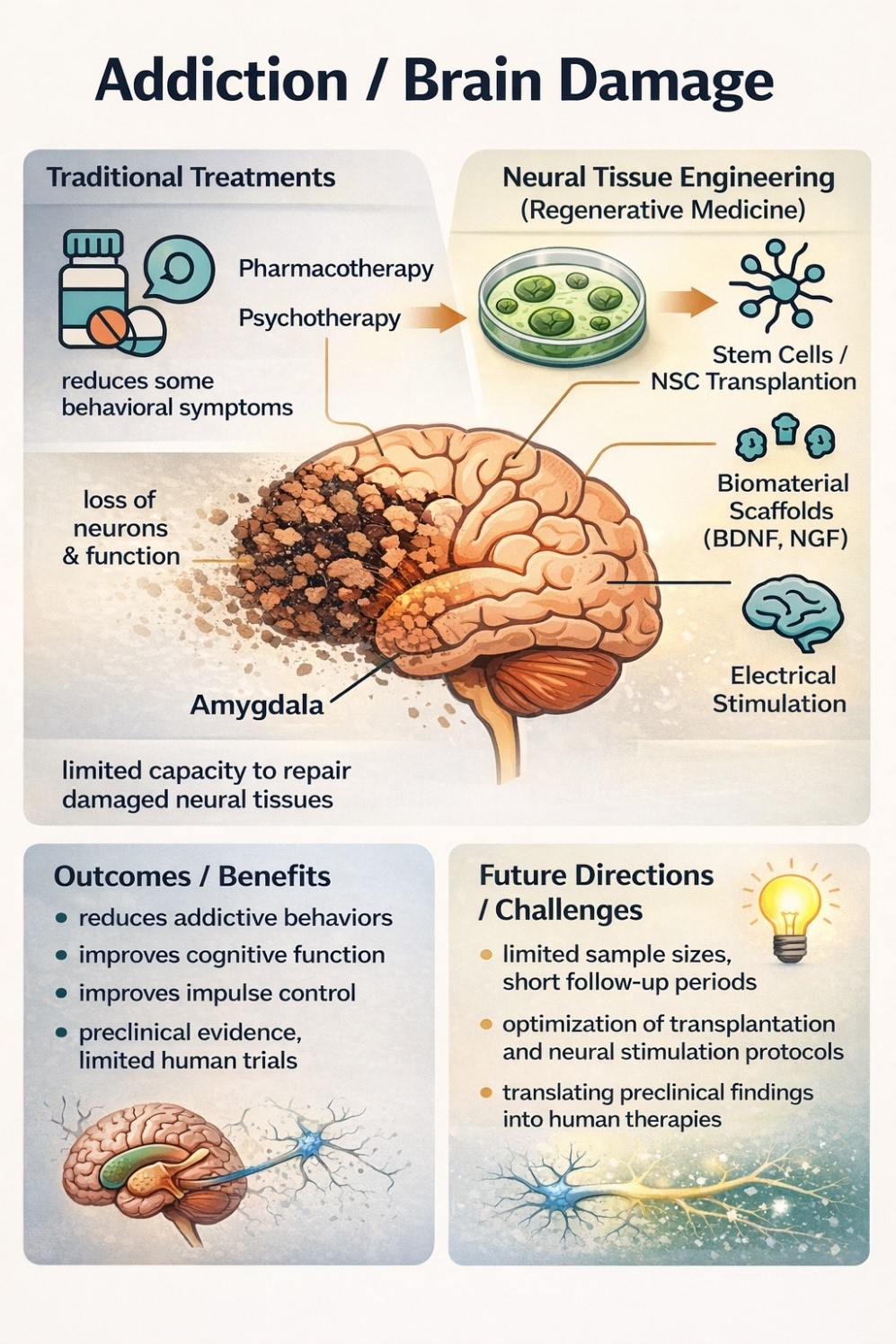
Addiction is a major global health challenge that affects not only psychological and social well-being but also induces profound biological damage to brain tissues. Chronic exposure to addictive substances results in neuronal loss, dysregulation of dopaminergic signaling, and dysfunction in critical brain regions such as the prefrontal cortex, amygdala, and nucleus accumbens. While conventional pharmacological treatments and psychotherapy can alleviate certain behavioral symptoms, they offer limited capacity to repair underlying neural damage. In this context, tissue engineering, as a key branch of regenerative medicine, has emerged as a promising approach for restoring damaged neural structures. Advanced strategies involving biomaterial scaffolds, stem cells, neurotrophic factors, and three-dimensional bioprinting enable neuronal regeneration and reconstruction of neural networks. Moreover, engineered platforms such as brain organoids and brain-on-a-chip systems provide powerful tools for modeling addiction-related neurobiological mechanisms at cellular and molecular levels.
Preclinical studies have demonstrated that neural stem cell transplantation, growth factor–loaded scaffolds (e.g., BDNF and NGF), and controlled electrical stimulation can enhance neuronal survival, promote synaptic remodeling, and reduce addictive behaviors. Early clinical investigations have also reported encouraging outcomes, including improved cognitive function, enhanced impulse control, and reduced relapse rates, although challenges such as limited sample sizes, short follow-up durations, and protocol optimization remain. This review summarizes the biological basis of addiction and key principles of neural tissue engineering, emphasizing their roles in brain modeling and regeneration. Finally, future perspectives, translational challenges, and research directions necessary for clinical application are discussed.
References
Belfiore CI, Galofaro V, Cotroneo D, Lopis A, Tringali I, Denaro V, et al. A multi-level analysis of biological, social, and psychological determinants of substance use disorder and co-occurring mental health outcomes. Psychoactives. 2024;3(2):194-214.
Ahmadirad N, Fathollahi Y, Janahmadi M, Ghasemi Z, Shojaei A, Rezaei M, et al. The role of α adrenergic receptors in mediating the inhibitory effect of electrical brain stimulation on epileptiform activity in rat hippocampal slices. Brain Research. 2021;1765:147492.
Escobar AP, Bonansco C, Cruz G, Dagnino-Subiabre A, Fuenzalida M, Negrón I, et al. Central and peripheral inflammation: a common factor causing addictive and neurological disorders and aging-related pathologies. International Journal of Molecular Sciences. 2023;24(12):10083.
Zhao Q, Zhang X, Wei Z. Summary and Prospect of Addiction. Substance and Non-substance Addiction. 2025:301-17.
Gasparyan A, Maldonado Sanchez D, Navarrete F, Sion A, Navarro D, García-Gutiérrez MS, et al. Cognitive alterations in addictive disorders: A translational approach. Biomedicines. 2023;11(7):1796.
Gu C, Geng Y-c, Zhu L-n. Dysregulation of dopamine neurotransmission in drug addicts: implications for criminal behavior and corrective interventions. Frontiers in Psychiatry. 2024;15:1434083.
Speranza L, Di Porzio U, Viggiano D, de Donato A, Volpicelli F. Dopamine: the neuromodulator of long-term synaptic plasticity, reward and movement control. Cells. 2021;10(4):735.
Zhylin M, Mendelo V, Tolmachov O, Ryhel O, Yudenko O. Innovative Rehabilitation Strategies for Chemical Dependency: Integrating Biochemical Insights and Psychosocial Approaches. Integrative Biomedical Research. 2024;8(7):1-16.
Ashammakhi N, GhavamiNejad A, Tutar R, Fricker A, Roy I, Chatzistavrou X, et al. Highlights on advancing frontiers in tissue engineering. Tissue Engineering Part B: Reviews. 2022;28(3):633-64.
Zamproni LN, Mundim MT, Porcionatto MA. Neurorepair and regeneration of the brain: a decade of bioscaffolds and engineered microtissue. Frontiers in cell and developmental biology. 2021;9:649891.
Kuchakzadeh F, Ai J, Ebrahimi-Barough S. Tissue engineering and stem cell-based therapeutic strategies for premature ovarian insufficiency. Regenerative therapy. 2024;25:10-23.
Dave R, Pandey K, Patel R, Gour N, Bhatia D. Biological scaffolds in 3D cell models: driving innovation in drug discovery. Stem Cell Reviews and Reports. 2025 Jan;21(1):147-66.
Brofiga M, Pisano M, Raiteri R, Massobrio P. On the road to the brain-on-a-chip: a review on strategies, methods, and applications. Journal of Neural Engineering. 2021;18(4):041005.
Maharani IAK, Sukoco BM, Usman I, Ahlstrom D. Learning-driven strategic renewal: systematic literature review. Management Research Review. 2024;47(5):708-43.
Stewart AF, Fulton SL, Maze I. Epigenetics of drug addiction. Cold Spring Harbor perspectives in medicine. 2021;11(7):a040253.
Tyler RE, Leggio L. Biological basis of addiction and alcohol use disorder. Clinical liver disease. 2024;23(1):e0177.
Kourosh-Arami M, Komaki A, Gholami M. Addiction-induced plasticity in underlying neural circuits. Neurological Sciences. 2022;43(3):1605-15.
Ferrer-Pérez C, Montagud-Romero S, Blanco-Gandía MC. Neurobiological theories of addiction: a comprehensive review. Psychoactives. 2024;3(1):35-47.
Ghasemi Z, Naderi N, Shojaei A, Raoufy MR, Ahmadirad N, Barkley V, et al. Group I metabotropic glutamate receptors contribute to the antiepileptic effect of electrical stimulation in hippocampal CA1 pyramidal neurons. Epilepsy Research. 2021;178:106821.
Sheikhha M, Ghasemi N, Nazem H, Homaei A, Haghirossadat F. Comparison of the Rate of Mu Receptor Gene Single Nucleotide Polymorphism in Addicts and Non Addicts. The Journal of Shahid Sadoughi University of Medical Sciences. 2010;18(4):330-6.
Bayassi-Jakowicka M, Lietzau G, Czuba E, Patrone C, Kowiański P. More than addiction—the nucleus accumbens contribution to development of mental disorders and neurodegenerative diseases. International journal of molecular sciences. 2022;23(5):2618.
Behl T, Makkar R, Sehgal A, Singh S, Sharma N, Zengin G, et al. Current trends in neurodegeneration: Cross talks between oxidative stress, cell death, and inflammation. International Journal of Molecular Sciences. 2021;22(14):7432.
Ceceli AO, Bradberry CW, Goldstein RZ. The neurobiology of drug addiction: cross-species insights into the dysfunction and recovery of the prefrontal cortex. Neuropsychopharmacology. 2022;47(1):276-91.
Chen H, Dong G, Li K. Overview on brain function enhancement of Internet addicts through exercise intervention: Based on reward-execution-decision cycle. Frontiers in Psychiatry. 2023;14:1094583.
Maiolo L, Guarino V, Saracino E, Convertino A, Melucci M, Muccini M, et al. Glial interfaces: advanced materials and devices to uncover the role of astroglial cells in brain function and dysfunction. Advanced healthcare materials. 2021;10(1):2001268.
Wani SN, Grewal AK, Khan H, Singh TG. Elucidating the molecular symphony: unweaving the transcriptional & epigenetic pathways underlying neuroplasticity in opioid dependence and withdrawal. Psychopharmacology. 2024;241(10):1955-81.
Mestre-Bach G, Potenza MN. Neural mechanisms linked to treatment outcomes and recovery in substance-related and addictive disorders. Dialogues in Clinical Neuroscience. 2023;25(1):75-91.
Sha B, Du Z. Neural repair and regeneration interfaces: a comprehensive review. Biomedical Materials. 2024;19(2):022002.
Wen X, Du Z, Wang Z, Xu Y, Wang K, Yu D, et al. Medicine-engineering interdisciplinary researches for addiction: Opportunities and challenges. Meta-Radiology. 2023;1(2):100024.
Raj S, Joshi AR. Bridging the gap: Extracellular matrix‐based strategies for peripheral nerve regeneration and neuropathic pain management. British Journal of Pharmacology. 2025.
Doblado LR, Martínez-Ramos C, Pradas MM. Biomaterials for neural tissue engineering. Frontiers in Nanotechnology. 2021;3:643507.
Cecerska-Heryć E, Pękała M, Serwin N, Gliźniewicz M, Grygorcewicz B, Michalczyk A, et al. The use of stem cells as a potential treatment method for selected neurodegenerative diseases. Cellular and Molecular Neurobiology. 2023;43(6):2643-73.
Yang L, Liu S-C, Liu Y-Y, Zhu F-Q, Xiong M-J, Hu D-X, et al. Therapeutic role of neural stem cells in neurological diseases. Frontiers in Bioengineering and Biotechnology. 2024;12:1329712.
Wang Y, Zou L, Liu W, Chen X. An overview of recent progress in engineering three-dimensional scaffolds for cultured meat production. Foods. 2023;12(13):2614.
Homaeigohar S, Boccaccini AR. Nature-derived and synthetic additives to poly (ɛ-caprolactone) nanofibrous systems for biomedicine; an updated overview. Frontiers in Chemistry. 2022;9:809676.
Satchanska G, Davidova S, Petrov PD. Natural and synthetic polymers for biomedical and environmental applications. Polymers. 2024;16(8):1159.
Moharreri P, Molavi AM, Abroumand Gholami A, Rahmani S, Mokhtari T, Gheybi F, et al. In vitro evaluation of bioactive PCL/alginate fibers with controlled liposomal silymarin release for mesenchymal stem cell transplantation. Scientific Reports. 2025;15(1):35738.
Ceci FM, Ferraguti G, Petrella C, Greco A, Ralli M, Iannitelli A, et al. Nerve growth factor in alcohol use disorders. Current Neuropharmacology. 2021;19(1):45-60.
Gupta A, Singh S. Potential role of growth factors controlled release in achieving enhanced neuronal trans-differentiation from mesenchymal stem cells for neural tissue repair and regeneration. Molecular Neurobiology. 2022;59(2):983-1001.
Peyton L, Oliveros A, Choi D-S, Jang M-H. Hippocampal regenerative medicine: neurogenic implications for addiction and mental disorders. Experimental & molecular medicine. 2021;53(3):358-68.
Giménez S, Millan A, Mora-Morell A, Ayuso N, Gastaldo-Jordán I, Pardo M. Advances in brain stimulation, nanomedicine and the use of magnetoelectric nanoparticles: Dopaminergic alterations and their role in neurodegeneration and drug addiction. Molecules. 2024;29(15):3580.
Sheikhbahei E, Ari AA. Harnessing the power of emerging digital technologies for improved sustainability and productivity in biomedical engineering and neuroscience. Scientific Hypotheses. 2024;1:47-52.
Cadena M, Ning L, King A, Hwang B, Jin L, Serpooshan V, et al. 3D bioprinting of neural tissues. Advanced healthcare materials. 2021;10(15):2001600.
Yu X, Zhang T, Li Y. 3D printing and bioprinting nerve conduits for neural tissue engineering. Polymers. 2020;12(8):1637.
Sousa AC, Alvites R, Lopes B, Sousa P, Moreira A, Coelho A, et al. Three-dimensional printing/bioprinting and cellular therapies for regenerative medicine: current advances. Journal of Functional Biomaterials. 2025;16(1):28.
Pereira I, Lopez-Martinez MJ, Samitier J. Advances in current in vitro models on neurodegenerative diseases. Frontiers in Bioengineering and Biotechnology. 2023;11:1260397.
Dave R, Pandey K, Patel R, Gour N, Bhatia D. Biological scaffolds in 3D cell models: driving innovation in drug discovery. Stem Cell Reviews and Reports. 2025;21(1):147-66.
Bocheng X, França R. Innovative 3D bioprinting approaches for advancing brain science and medicine: a literature review. Biomedical Physics & Engineering Express. 2024.
Lin C-H, Chang M-Y, Wu K-H, Tsai Y-H. Molecular and Genetic Mechanisms of Synaptic Changes in Addiction. Neurology Letters. 2025;4(2):96-101.
Samanipour R, Tahmooressi H, Rezaei Nejad H, Hirano M, Shin S-R, Hoorfar M. A review on 3D printing functional brain model. Biomicrofluidics. 2022;16(1).
Mancuso S, Bhalerao A, Cucullo L. Advances and challenges of bioassembly strategies in neurovascular in vitro modeling: an overview of current technologies with a focus on three-dimensional bioprinting. International Journal of Molecular Sciences. 2024;25(20):11000.
Arias-Peregrino VM, Tenorio-Barajas AY, Mendoza-Barrera CO, Román-Doval J, Lavariega-Sumano EF, Torres-Arellanes SP, et al. 3D Printing for Tissue Engineering: Printing Techniques, Biomaterials, Challenges, and the Emerging Role of 4D Bioprinting. Bioengineering. 2025;12(9):936.
Layrolle P, Payoux P, Chavanas S. Message in a scaffold: natural biomaterials for three-dimensional (3D) bioprinting of human brain organoids. Biomolecules. 2022;13(1):25.
Nicoletti VG, Pajer K, Calcagno D, Pajenda G, Nógrádi A. The role of metals in the neuroregenerative action of BDNF, GDNF, NGF and other neurotrophic factors. Biomolecules. 2022;12(8):1015.
Xia M, Zhao T, Wang X, Li Y, Li Y, Zheng T, et al. Brain-derived neurotrophic factor and its applications through nanosystem delivery. Iranian Journal of Pharmaceutical Research: IJPR. 2021;20(4):137.
Bellarmin M, Nandhini J, Karthikeyan E, Mahalakshmi D, Karthik K. A comprehensive review on stimuli-responsive nanomaterials: advancements in wound healing and tissue regeneration. Biomedical Materials & Devices. 2025:1-25.
Zhou N, Gu T, Xu Y, Liu Y, Peng L. Challenges and progress of neurodrug: bioactivities, production and delivery strategies of nerve growth factor protein. Journal of Biological Engineering. 2023;17(1):75.
Bordbar-Khiabani A, Gasik M. Smart hydrogels for advanced drug delivery systems. International Journal of Molecular Sciences. 2022;23(7):3665.
Gao H, Shen H, Zhang X, Liu Y, Shang Y, Sun S, et al. Revolutionizing neural regeneration with smart responsive materials: Current insights and future prospects. Bioactive Materials. 2025;52:393.
Shi J, Tang J, Xu J, Jiang N, Yang Y, Chen H, et al. Applications of hydrogels and nanoparticles in the treatment of traumatic brain injury. Frontiers in Bioengineering and Biotechnology. 2025;12:1515164.
Yuan M, Harnett MC, Yan T-H, Georgas E, Qin Y-X, Zhou H-C, et al. Progress, opportunities, and challenges of magneto-plasmonic nanoparticles under remote magnetic and light stimulation for brain-tissue and cellular regeneration. Nanomaterials. 2022;12(13):2242.
Patne AY, Mohapatra S, Mohapatra SS. Role of Nanomedicine in Transforming Pharmacotherapy for Substance Use Disorder (SUD). Wiley Interdisciplinary Reviews: Nanomedicine and Nanobiotechnology. 2025;17(2):e70008.
Cai S, Wu C, Yang W, Liang W, Yu H, Liu L. Recent advance in surface modification for regulating cell adhesion and behaviors. Nanotechnology Reviews. 2020;9(1):971-89.
Zieliński A, Majkowska-Marzec B. Whether carbon nanotubes are capable, promising, and safe for their application in nervous system regeneration. Some critical remarks and research strategies. Coatings. 2022;12(11):1643.
Abroumand Gholami A, Rahmani S, Moharreri P, Amirazodi E, Molavi AM, Mokhtari T, et al. Liposomal ellagic acid enhances the regenerative potential of ADMSC-laden nanofibrous PCL scaffolds in a rat model of spinal cord injury. Scientific Reports. 2025;15(1):30202.
Gordon T. Brief electrical stimulation promotes recovery after surgical repair of injured peripheral nerves. International Journal of Molecular Sciences. 2024;25(1):665.
Jiang Y, Zhou Y, Tian Y, Nabavi N, Ashrafizadeh M, Conde J, Li Z, Guo L. Conductive polymers in smart wound healing: From bioelectric stimulation to regenerative therapies. Materials Today Bio. 2025 Jul 21:102114.
Nishimura K, Takata K. Combination of drugs and cell transplantation: more beneficial stem cell-based regenerative therapies targeting neurological disorders. International journal of molecular sciences. 2021;22(16):9047.
Yuan T-F, Dong Y, Zhang L, Qi J, Yao C, Wang Y, et al. Neuromodulation-based stem cell therapy in brain repair: recent advances and future perspectives. Neuroscience Bulletin. 2021;37(5):735-45.
Sasirekhamani M, Veni T. 33. Neurobiology of Addiction and Rehabilitation: Unravelling the Neural Circuitry of Dependency and Paths to Recovery. MOSAIC OF IDEAS: MULTIDISCIPLINARY REFLECTIONS. 2024:319.
Struzyna LA, Harris JP, Katiyar KS, Chen HI, Cullen DK. Restoring nervous system structure and function using tissue engineered living scaffolds. Neural regeneration research. 2015;10(5):679-85.
Xia J, Gao X, Yao J, Fei Y, Song D, Gu Z, et al. Injectable Brain Extracellular Matrix Hydrogels Enhance Neuronal Migration and Functional Recovery After Intracerebral Hemorrhage. Biomaterials Research. 2025;29:0192.
Bernatoniene J, Plieskis M, Petrikonis K. Pharmaceutical 3D Printing Technology Integrating Nanomaterials and Nanodevices for Precision Neurological Therapies. Pharmaceutics. 2025;17(3):352.
Halim A, Qu K-Y, Zhang X-F, Huang N-P. Recent advances in the application of two-dimensional nanomaterials for neural tissue engineering and regeneration. ACS Biomaterials Science & Engineering. 2021;7(8):3503-29.
Velikic G, Maric DM, Maric DL, Supic G, Puletic M, Dulic O, et al. Harnessing the stem cell niche in regenerative medicine: innovative avenue to combat neurodegenerative diseases. International journal of molecular sciences. 2024;25(2):993.
Dutta AK, Srinivasulu C, Sunanda M, Lakshmi PV, Baratha N. Stem Cell Therapy in Regenerative Medicine Current Progress, Challenges, and Future Prospects. Journal of Neonatal Surgery. 2025;14(6).
Yang L, Du Y, Yang W, Liu J. Machine learning with neuroimaging biomarkers: Application in the diagnosis and prediction of drug addiction. Addiction Biology. 2023;28(2):e13267.
Popescu A, Marian M, Drăgoi AM, Costea R-V. Understanding the genetics and neurobiological pathways behind addiction. Experimental and Therapeutic Medicine. 2021;21(5):544.
Greener MR, Storr SJ. Conflicting theories on addiction aetiology and the strengths and limitations of substance use disorder disease modelling. Frontiers in molecular neuroscience. 2023;16:1166852.
Lovett ML, Nieland TJ, Dingle YTL, Kaplan DL. Innovations in 3D tissue models of human brain physiology and diseases. Advanced functional materials. 2020;30(44):1909146.
Hossain MK, Davidson M, Kypreos E, Feehan J, Muir JA, Nurgali K, et al. Immunotherapies for the treatment of drug addiction. Vaccines. 2022;10(11):1778.
Rouleau N, Murugan NJ, Kaplan DL. Functional bioengineered models of the central nervous system. Nature Reviews Bioengineering. 2023;1(4):252-70.
Salmina AB, Alexandrova OP, Averchuk AS, Korsakova SA, Saridis MR, Illarioshkin SN, et al. Current progress and challenges in the development of brain tissue models: How to grow up the changeable brain in vitro? Journal of Tissue Engineering. 2024;15:20417314241235527.
Li K, Gu L, Cai H, Lu H-C, Mackie K, Guo F. Human brain organoids for understanding substance use disorders. Drug metabolism and pharmacokinetics. 2025;60:101036.
Chang Y, Kim J, Park H, Choi H, Kim J. Modelling neurodegenerative diseases with 3D brain organoids. Biological Reviews. 2020;95(5):1497-509.
Wu S-R, Nowakowski TJ. Exploring human brain development and disease using assembloids. Neuron. 2025;113(8):1133-50.
Stankovic IN, Colak D. Prenatal drugs and their effects on the developing brain: insights from three-dimensional human organoids. Frontiers in Neuroscience. 2022;16:848648.
Dang J, Tiwari SK, Agrawal K, Hui H, Qin Y, Rana TM. Glial cell diversity and methamphetamine-induced neuroinflammation in human cerebral organoids. Molecular psychiatry. 2021;26(4):1194-207.
Yao H, Hu D, Wang J, Wu W, Zhao HH, Wang L, et al. Buprenorphine and methadone differentially alter early brain development in human cortical organoids. Neuropharmacology. 2023;239:109683.
Acharya P, Choi NY, Shrestha S, Jeong S, Lee MY. Brain organoids: A revolutionary tool for modeling neurological disorders and development of therapeutics. Biotechnology and bioengineering. 2024;121(2):489-506.
Servais B, Mahmoudi N, Gautam V, Tong W, Ibbotson MR, Nisbet DR, et al. Engineering brain-on-a-chip platforms. Nature Reviews Bioengineering. 2024;2(8):691-709.
Zhao C, Wang Z, Tang X, Qin J, Jiang Z. Recent advances in sensor-integrated brain-on-a-chip devices for real-time brain monitoring. Colloids and Surfaces B: Biointerfaces. 2023;229:113431.
Rudibaugh TT, Stuppy SR, Keung AJ. Reactive oxygen species mediate transcriptional responses to dopamine and cocaine in human cerebral organoids. International Journal of Molecular Sciences. 2023;24(22):16474.
Luís C, Cannella N, Spanagel R, Köhr G. Persistent strengthening of the prefrontal cortex–nucleus accumbens pathway during incubation of cocaine-seeking behavior. Neurobiology of learning and memory. 2017;138:281-90.
Staicu CE, Jipa F, Axente E, Radu M, Radu BM, Sima F. Lab-on-a-chip platforms as tools for drug screening in neuropathologies associated with blood–brain barrier alterations. Biomolecules. 2021;11(6):916.
Rodrigues RO, Shin S-R, Bañobre-López M. Brain-on-a-chip: An emerging platform for studying the nanotechnology-biology interface for neurodegenerative disorders. Journal of Nanobiotechnology. 2024;22(1):573.
Moradian H, Gabriel T, Barrau M, Roblin X, Paul S. New methods to unveil host-microbe interaction mechanisms along the microbiota-gut-brain-axis. Gut Microbes. 2024;16(1):2351520.
Villanueva-Flores F, Garcia-Atutxa I, Santos A, Armendariz-Borunda J. Toward a new generation of bio-scaffolds for neural tissue engineering: challenges and perspectives. Pharmaceutics. 2023;15(6):1750.
Kouchakzadeh F, Ebrahimi-Barough S, Aflatoonian B, Ai J, Mazaheri F, Montazeri F, et al. Therapeutic potential of endometrial stem cells encapsulated in alginate/gelatin hydrogel to treat of polycystic ovary syndrome. Regenerative therapy. 2024;26:693-707.
Li M, Zhou J, Ning Y, Xiong Y. Chemical materials involved in neural tissue engineering scaffold techniques: a narrative review. Advanced Technology in Neuroscience. 2024;1(2):244-60.
Khodve G, Banerjee S, Kumari M, Ravichandiran V, Banerjee S, Roy S. Exploration of biomaterial and stem cell-based strategies for promoting neuronal regeneration and creating engineered 3D in-vitro disease models. Journal of Translational Medicine. 2025;23(1):1-37.
Fang Q, Zhang Y, Chen X, Li H, Cheng L, Zhu W, et al. Three-dimensional graphene enhances neural stem cell proliferation through metabolic regulation. Frontiers in Bioengineering and Biotechnology. 2020;7:436.
Karami A, Molavi AM, Babaloo H, Farhadian N. Spinal Cord Injury Treatment by Applying a Composite Scaffold Transplanted with Mesenchymal Stem Cells and Chitosan-Coated Nanostructured Lipid Carriers of Curcumin. ACS Applied Bio Materials. 2025;8(8):6881-96.
Toader C, Dumitru AV, Eva L, Serban M, Covache-Busuioc R-A, Ciurea AV. Nanoparticle strategies for treating CNS disorders: a comprehensive review of drug delivery and theranostic applications. International Journal of Molecular Sciences. 2024;25(24):13302.
Yan Y, Li X, Gao Y, Mathivanan S, Kong L, Tao Y, et al. 3D bioprinting of human neural tissues with functional connectivity. Cell Stem Cell. 2024;31(2):260-74. e7.
Restan Perez M, Sharma R, Masri NZ, Willerth SM. 3D bioprinting mesenchymal stem cell-derived neural tissues using a fibrin-based bioink. Biomolecules. 2021;11(8):1250.
Blithikioti C, Fried EI, Albanese E, Field M, Cristea IA. Reevaluating the brain disease model of addiction. The Lancet Psychiatry. 2025;12(6):469-74.
Yu X, Meng X, Pei Z, Wang G, Liu R, Qi M, et al. Physiological electric field: a potential construction regulator of human brain organoids. International Journal of Molecular Sciences. 2022;23(7):3877.
Li Z, Qi Y, Sun L, Li Z, Chen S, Zhang Y, et al. Three-dimensional nanofibrous sponges with aligned architecture and controlled hierarchy regulate neural stem cell fate for spinal cord regeneration. Theranostics. 2023;13(14):4762.
Ahmadieh-Yazdi A, Karimi M, Afkhami E, Hajizadeh-Tafti F, Kuchakzadeh F, Yang P, et al. Unveiling therapeutic potential: Adipose tissue-derived mesenchymal stem cells and their exosomes in the management of diabetes mellitus, wound healing, and chronic ulcers. Biochemical Pharmacology. 2024;226:116399.
Gimenez S, Millan A, Mora-Morell A, Ayuso N, Gastaldo-Jordán I, Pardo M. Advances in Brain Stimulation and Nanomedicine: Dopaminergic Alterations and Its Role in Neurodegeneration and Drug Addiction. 2024.
Vashishat A, Patel P, Das Gupta G, Das Kurmi B. Alternatives of animal models for biomedical research: a comprehensive review of modern approaches. Stem Cell Reviews and Reports. 2024;20(4):881-99.
Logan S, Arzua T, Canfield SG, Seminary ER, Sison SL, Ebert AD, et al. Studying human neurological disorders using induced pluripotent stem cells: from 2D monolayer to 3D organoid and blood brain barrier models. Comprehensive physiology. 2019;9(2):565-611.
Rahmani M, Hemati M, Akhlaghi M, Haghiralsadat BF, Oroojalian F. Synergistic co-administration of doxorubicin and berberine by PLGA/PVA hybrid polymeric Nanoformulation for breast cancer treatment. Nanomedicine Journal. 2025;12(2).
Ayad A. Bioinspired NeuroPods: AI-Enhanced 4D Composite Bioprinting Revolutionizing Brain-on-Chip and Neural Regeneration. Preprint, July. 2025;23:10.20944.
Singh S, Kumar R, Payra S, Singh SK. Artificial intelligence and machine learning in pharmacological research: bridging the gap between data and drug discovery. Cureus. 2023;15(8).
GUDE S. Exploring innovative drug delivery systems for the targeted treatment and rehabilitation of individuals affected by narcotics and psychotropic substances: a multidisciplinary approach in pharmaceutics. Translational and Regulatory Sciences. 2024;6(3):72-83.
Tsai S-T, Liew H-K, Li H-M, Lin S-Z, Chen S-Y. Harnessing neurogenesis and neuroplasticity with stem cell treatment for addictive disorders. Cell Transplantation. 2019;28(9-10):1127-31.
Martinez B, Peplow PV. Biomaterial and tissue-engineering strategies for the treatment of brain neurodegeneration. Neural Regeneration Research. 2022;17(10):2108-16.
Pai V, Singh BN, Singh AK. Insights into advances and applications of biomaterials for nerve tissue injuries and neurodegenerative disorders. Macromolecular Bioscience. 2024;24(12):2400150.
Mohammadi AT, Far YK, Fathi H, Zareii D, Shekarian N, Kazemi A, et al. BioPharma Revolution: Exploring the Nexus of Biotechnology and Pharmacology: Nobel Sciences; 2024.
Nie L, Yao D, Chen S, Wang J, Pan C, Wu D, et al. Directional induction of neural stem cells, a new therapy for neurodegenerative diseases and ischemic stroke. Cell Death Discovery. 2023;9(1):215.
Berlet R, Galang Cabantan DA, Gonzales-Portillo D, Borlongan CV. Enriched environment and exercise enhance stem cell therapy for stroke, Parkinson’s disease, and Huntington’s disease. Frontiers in Cell and Developmental Biology. 2022;10:798826.
Xu C, Loh HH, Law P-Y. Effects of addictive drugs on adult neural stem/progenitor cells. Cellular and molecular life sciences. 2016;73(2):327-48.
Zhang L, Chen S, Zou R, Shu X, Zhang J, He X, et al. Cocaine amphetamine-regulated transcription peptide inhibits apoptosis in oxygen–glucose deprived neural stem cells. Frontiers in Neuroscience. 2024;18:1424719.
Tang X-Y, Wu S, Wang D, Chu C, Hong Y, Tao M, et al. Human organoids in basic research and clinical applications. Signal transduction and targeted therapy. 2022;7(1):168.
Osborn TM, Hallett PJ, Schumacher JM, Isacson O. Advantages and recent developments of autologous cell therapy for Parkinson’s disease patients. Frontiers in Cellular Neuroscience. 2020;14:58.
Geevarghese R, Sajjadi SS, Hudecki A, Sajjadi S, Jalal NR, Madrakian T, et al. Biodegradable and non-biodegradable biomaterials and their effect on cell differentiation. International journal of molecular sciences. 2022;23(24):16185.
Kirillova A, Yeazel TR, Asheghali D, Petersen SR, Dort S, Gall K, et al. Fabrication of biomedical scaffolds using biodegradable polymers. Chemical reviews. 2021;121(18):11238-304.
Yarahmadi A, Dousti B, Karami-Khorramabadi M, Afkhami H. Materials based on biodegradable polymers chitosan/gelatin: a review of potential applications. Frontiers in Bioengineering and Biotechnology. 2024;12:1397668.
Wei H, Cui J, Lin K, Xie J, Wang X. Recent advances in smart stimuli-responsive biomaterials for bone therapeutics and regeneration. Bone research. 2022;10(1):17.
Qin C, Qi Z, Pan S, Xia P, Kong W, Sun B, et al. Advances in conductive hydrogel for spinal cord injury repair and regeneration. International journal of nanomedicine. 2023:7305-33.
Joghataei MT, Bakhtiarzadeh F, Dehghan S, Ketabforoush AHME, Golab F, Zarbakhsh S, et al. The role of neurotransmitters in glioblastoma multiforme‐associated seizures. International Journal of Developmental Neuroscience. 2023;83(8):677-90.
Razavi R, Khajouei G, Divsalar F, Dawi E, Amiri M. Recent advances on brain drug delivery via nanoparticles: alternative future materials for neuroscience applications; a review. Reviews in the Neurosciences. 2025;36(4):405-30.
Azadmanesh F, Pourmadadi M, Zavar Reza J, Yazdian F, Omidi M, Haghirosadat BF. Synthesis of a novel nanocomposite containing chitosan as a three‐dimensional printed wound dressing technique: Emphasis on gene expression. Biotechnology Progress. 2021;37(4):e3132.
Khalin I, Alyautdin R, Wong TW, Gnanou J, Kocherga G, Kreuter J. Brain-derived neurotrophic factor delivered to the brain using poly (lactide-co-glycolide) nanoparticles improves neurological and cognitive outcome in mice with traumatic brain injury. Drug delivery. 2016;23(9):3520-8.
Kamarudin S, Iezhitsa I, Tripathy M, Alyautdin R, Ismail N. Neuroprotective effect of poly (lactic‑co‑glycolic acid) nanoparticle‑bound brain‑derived neurotrophic factor in a permanent middle cerebral artery occlusion model of ischemia in rats. Acta Neurobiologiae Experimentalis. 2020;80(1):1-18.
Hong J, Wu D, Wang H, Gong Z, Zhu X, Chen F, et al. Magnetic fibrin nanofiber hydrogel delivering iron oxide magnetic nanoparticles promotes peripheral nerve regeneration. Regenerative Biomaterials. 2024;11:rbae075.
Kadan-Jamal K, Wronowski F, Jin A, Naegele TE, Montes VR, Tao X, et al. Electrical Stimulation of Cells: Drivers, Technology, and Effects. Chemical Reviews. 2025;125(15):6874-905.
Marsudi MA, Ariski RT, Wibowo A, Cooper G, Barlian A, Rachmantyo R, et al. Conductive polymeric-based electroactive scaffolds for tissue engineering applications: Current progress and challenges from biomaterials and manufacturing perspectives. International Journal of Molecular Sciences. 2021;22(21):11543.
Mehta DD, Praecht A, Ward HB, Sanches M, Sorkhou M, Tang VM, et al. A systematic review and meta-analysis of neuromodulation therapies for substance use disorders. Neuropsychopharmacology. 2024;49(4):649-80.
Steele VR. A circuit-based approach to treating substance use disorders with noninvasive brain stimulation. Biological Psychiatry. 2021;89(10):944-6.
Sydnor VJ, Cieslak M, Duprat R, Deluisi J, Flounders MW, Long H, et al. Cortical-subcortical structural connections support transcranial magnetic stimulation engagement of the amygdala. Science Advances. 2022;8(25):eabn5803.
Lomas C. Neurobiology, psychotherapeutic interventions, and emerging therapies in addiction: a systematic review. Journal of Addictive Diseases. 2024:1-19.
VARADHARAJULU G, CHINTAMANI R, HIMASHREE G. The Role of Physiotherapy in Enhancing Functional Recovery in Musculoskeletal and Neurological Conditions. AI‐driven Innovations in Physiotherapy and Oncology 2. 2025:275-90.
Bagherpour R, Bagherpour G, Mohammadi P. Application of artificial intelligence in tissue engineering. Tissue Engineering Part B: Reviews. 2025;31(1):31-43.
Tang Y, Friec AL, Chen M, Sun D. Designed Biomaterial‐Enhanced Cell Transplantation for Neural Tissue Engineering. Aggregate. 2025;6(5):e70022.
Zarrintaj P, Khodadadi Yazdi M, Youssefi Azarfam M, Zare M, Ramsey JD, Seidi F, et al. Injectable cell-laden hydrogels for tissue engineering: recent advances and future opportunities. Tissue Engineering Part A. 2021;27(11-12):821-43.
Zhao Y, Liu Y, Kang S, Sun D, Liu Y, Wang X, et al. Peripheral nerve injury repair by electrical stimulation combined with graphene-based scaffolds. Frontiers in Bioengineering and Biotechnology. 2024;12:1345163.
Dave R, Pandey K, Patel R, Gour N, Bhatia D. Leveraging 3D cell culture and AI technologies for next-generation drug discovery. Cell Biomaterials. 2025;1(3).
Vickram A, Infant SS, Manikandan S, Sowndharya BB, Gulothungan G, Chopra H. 3D bio-printed scaffolds and smart implants: evaluating functional performance in animal surgery models. Annals of Medicine and Surgery. 2025;87(6):3618-34.
Harary PM, Jgamadze D, Kim J, Wolf JA, Song H, Ming G-l, et al. Cell replacement therapy for brain repair: recent progress and remaining challenges for treating Parkinson’s disease and cortical injury. Brain Sciences. 2023;13(12):1654.
Yan M, Wang L, Wu Y, Wang L, Lu Y. Three-dimensional highly porous hydrogel scaffold for neural circuit dissection and modulation. Acta Biomaterialia. 2023;157:252-62.
Varghese R, Soman N, Kumar D. Novel advances and recent updates in the crosstalk between neuroplasticity and addiction. Journal of Clinical Chemistry. 2022;1(1).
Yi H, Patel R, Patel KD, Bouchard L-S, Jha A, Perriman AW, et al. Conducting polymer-based scaffolds for neuronal tissue engineering. Journal of Materials Chemistry B. 2023;11(46):11006-23.
Açıksarı A, Yazır Y, Mert S, Halbutoğulları ZS, Narin S, Gacar G. The effects of PLGA nanoparticles containing different growth factors on neural stem cell differentiation and their transition efficiency after targeting with TRF. CNS Neuroscience & Therapeutics. 2025;31(9):e70576.
Haghiralsadat F, Amoabediny G, Sheikhha MH, Zandieh‐doulabi B, Naderinezhad S, Helder MN, et al. New liposomal doxorubicin nanoformulation for osteosarcoma: Drug release kinetic study based on thermo and pH sensitivity. Chemical biology & drug design. 2017;90(3):368-79.
Combeau M, Colitti N, Clauzel J, Desmoulin F, Brilhault A, Fitremann J, et al. Printable biomaterials for 3D brain regenerative scaffolds: An in vivo biocompatibility assessment. Regenerative Therapy. 2025;30:641-55.
Guan P, Fan L, Zhu Z, Yang Q, Kang X, Li J, et al. M2 microglia-derived exosome-loaded electroconductive hydrogel for enhancing neurological recovery after spinal cord injury. Journal of Nanobiotechnology. 2024;22(1):8.
Fan L, Liu C, Chen X, Zheng L, Zou Y, Wen H, et al. Exosomes‐loaded Electroconductive hydrogel synergistically promotes tissue repair after spinal cord injury via Immunoregulation and enhancement of myelinated axon growth. Advanced Science. 2022;9(13):2105586.
Mishchenko TA, Klimenko MO, Kuznetsova AI, Yarkov RS, Savelyev AG, Sochilina AV, et al. 3D-printed hyaluronic acid hydrogel scaffolds impregnated with neurotrophic factors (BDNF, GDNF) for post-traumatic brain tissue reconstruction. Frontiers in Bioengineering and Biotechnology. 2022;10:895406.
Galindo AN, Rubio DAF, Hettiaratchi MH. Biomaterial strategies for regulating the neuroinflammatory response. Materials Advances. 2024;5(10):4025-54.
Hammam IA, Winters R, Hong Z. Advancements in the application of biomaterials in neural tissue engineering: A review. Biomedical Engineering Advances. 2024;8:100132.
Bellamkonda R, Aebischer P. Tissue engineering in the nervous system. Biotechnology and bioengineering. 1994;43(7):543-54.
Jin H, Xue Z, Liu J, Ma B, Yang J, Lei L. Advancing organoid engineering for tissue regeneration and biofunctional reconstruction. Biomaterials Research. 2024;28:0016.
Giantomasi L. Advanced microstructured platforms for neuroscience: from lab-on-chips for circadian clock studies to next generation bionic 3D brain tissue models. 2021.
Malik JA, Goyal MR, Sadiq MJM. Sustainable Nanomaterials for Biosystems Engineering: Trends in Renewable Energy, Environment, and Agriculture: CRC Press; 2023.
Katamesh AA, Subaiea GM, Mostafa M, Ibrahim M, Alobaida A, El-Horany HE, et al. Revolutionizing Cancer Care: The Role of 3D Printing in Personalized Oncology. ACS omega. 2025;10(35):39350-70.
Lo C, Mane M, Kim JH, Berk M, Sharp RR, Lee KH, et al. Treating addiction with deep brain stimulation: Ethical and legal considerations. International Journal of Drug Policy. 2023;113:103964.
.170 Babaloo H, Barati S, Haghir H, Gholami AA, Moharreri P, Fallahnezhad S, Asl ER, Noorzehi G, Tahmasebi F. The effect of PU/MWCNT nanofiber scaffolds containing hesperidin nanoparticles and mesenchymal stem cells on the microglia and astrocyte phenotype in the spinal cord injury model. Neuroscience. 2025 Jul 29.
.171 Abroumand Gholami A, Tahmasebi F, Haghir H, Babaloo H. Targeting JAK/STAT signaling pathway by curcumin: implications for spinal cord injury neuroprotection: AA Gholami et al. Inflammopharmacology. 2025 Aug;33(8):4377-95.
Downloads
Published
How to Cite
Issue
Section
License
Copyright (c) 2026 The Journal of Applied Tissue Engineering

This work is licensed under a Creative Commons Attribution-NonCommercial-NoDerivatives 4.0 International License.